I’m not a marathon runner. In fact I don’t really even think I’m that much of an athlete. However I have suffered from chronic exertional compartment syndrome and have since had surgery to correct it. I thought I’d write about my experience here in the hopes that someone might find it useful.
A Little Bit of History
I was very active, mostly with a lot of squash, premier netball, as well as the odd game of touch rugby. I had had a tightening of what I thought were the muscles on the outside of my legs for some time and had asked various people if they knew how to stretch them. I’m fairly au fait with anatomy after studying it at school but even I couldn’t figure it out. They’d been uncomfortable mostly while I was playing netball, but I put it down to not being as fit as I could be and put up with the pain.
It wasn’t until one day I was playing squash when the pain got so bad I had to come off the court. Luckily the manager of the team I was training with happened to be a physiotherapist and mentioned that the symptoms I was describing sounded like compartment syndrome. I was training for squash nationals and playing finals netball so I didn’t want to stop. I’m also fairly stubborn when it comes to pain stopping me doing things (says the girl who walked home one day with two badly sprained ankles!) so I didn’t treat this any differently.
With squash nationals done and dusted, I moved away from the city where I first heard about compartment syndrome a few months later but began to research it online. It wasn’t until one day I left the squash court and ended up on the floor in tears from the pain that I knew I had to do something about it.
What causes the pain?
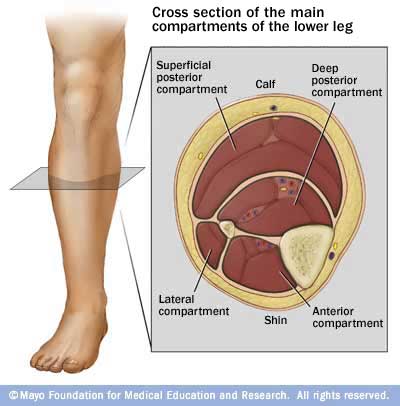
When we exercise, the body pumps blood to the muscles that are being worked, causing the muscles to swell or expand. The muscles are contained within a sheath. You know when you buy meat from the supermarket and it sometimes has that clear, stretchy stuff on it? That clear covering is the sheath. When people with compartment syndrome exercise, there’s not enough room within the sheath for the expanding muscle, therefore pressure builds and pain arises. A friend of mine once used a great analogy – it’s like trying to blow a balloon (muscle) up inside a drink bottle (sheath). It just doesn’t work.
Doing Something About it
I went to my GP who referred me to a specialist sports practitioner, who then referred me to a surgeon who specialised in compartment syndrome. Said surgeon sent me for tests (which, by the way, aren’t covered by ACC as the ‘injury’ is deemed to be progressive – kind of like RSI which, incidentally, IS covered).
Honestly, if there were a best part about having CECS, it would have to be seeing a medical practitioner about this condition and watching their eyes light up when you tell them what you have. It’s not a common condition and I think they get a little bit excited when they get to deal with something different from the norm. I digress!
By the time I got the appointment for pressure tests, I had developed drop-foot (or foot-drop as it’s otherwise known) which is when your foot makes a distinctive “slapping” sound as you walk because you can’t lift the front of your foot properly. I couldn’t walk more than 100 metres without the pain getting so bad I’d have to stop. Ten minutes after ceasing exercise, I was fine – which was probably the single most frustrating thing about the entire condition.
The Pressure Tests
I will not lie. The tests are not pleasant. Basically I had three injections of anaesthetic (in marked spots) into each leg to numb the areas for when the BIG needle gets inserted. I was then told to do an activity that causes the pain and come back to the room once it comes on. The specialist was surprised that I was back within five minutes, even though I’d continued as long as I possibly could because I wanted to be sure I got the results I knew would come.

The second round of injections measure the pressure inside the compartments of your leg. Anything over 30mmHg is “surgery territory”. As a gauge, my worst compartment was ~90mmHg. No wonder I was in so much pain!
As a result of the pressure tests, it was recommended that I be prioritised for surgery and I was placed on a waiting list. Through a mix of medical misadventure and me moving city again (and therefore District Health Board jurisdiction) it took me a further 8 months before I finally got my surgery. Bearing in mind that this was around two years after I had initially consulted my GP, I was virtually unable to walk and had put on a lot of weight – a horrible side affect for someone who used to be so active.
Finally! The Surgery
The technical name for the surgery I had was bilateral tricompartmental fasciotomies, which loosely translates to having three compartments in each leg released. When I say released… they make an incision, then cut open the sheath that holds the muscle in place. It basically allows the muscle to expand as large as it needs to when you’re exercising.
It was an overnight stay in Middlemore Hospital for me (and I’m thankful it was only one night!). When it was time to go home, I actually managed to stand up with my legs supporting my full weight while I got dressed. The only piece of advice I can give you is DON’T DO THIS. You may think you won’t move, but you will and it hurts! I was in a wheelchair to start of with, but given crutches before I left the hospital.
Healing Time
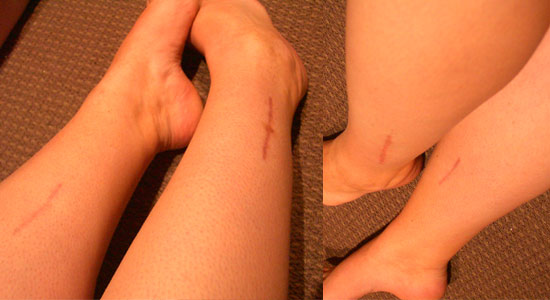
I have two scars on each leg – one on the outside above my ankle bone about four inches long and one on the inside of my leg toward the front about midway up my lower leg – about three inches long.
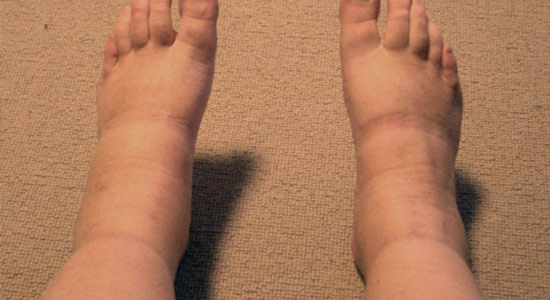
The advice I had read and was given was that it should be around 12 weeks until I could get 100% back into sport. This wasn’t the case for me, however. I went back to work two weeks after surgery (I recommend taking longer – perhaps another week) and even though I held a sedentary position, my ankles and feet would swell up enormously after keeping them “down” for the day, even though I had tried to elevate them as much as I could.
My employer at the time was less than supportive, even though I’d requested that I work from home. If you can, I would definitely aim for three weeks to recover. I was walking without crutches after one week but would still get pain and swelling in the week following. My recovery wasn’t aided by a minor infection in one of the wounds either, so I now have a more prominent scar than I would have otherwise.
Getting back into the Swing of Sport
So, after my two years of not being able to do anything, I was finally free to get back into sport! Unfortunately for me, I don’t think my body was as keen as my mind was and I was bogged down with miscellaneous injuries over the coming year (including prolapsed discs in my back and strained calf muscles). It’s now been around 15 months since I had the surgery and I’m finally uninjured enough to get back on the exercise wagon – enough to hopefully start losing some of the 20kg I packed on over the time I was involuntarily inactive.
Even when running now, I get numbness in my toes and feet. Areas of my leg, ankle and foot are still numb due to the nerves being severed during surgery but I’m hoping to get most of that feeling back. I still get some fatigue and soreness in the same areas as before but nowhere near the amount of agony I was in pre-surgery. My legs are also a funny “shape” because the muscles bulge out in places they didn’t bulge before, but it’s purely aesthetic and I knew to expect that. They are though, still a lot more svelt and “spongey” to the touch than they were pre-surgery. My poor legs.. what an ordeal!
Further Information
If you have any questions, you can contact me or leave a comment on this post.
Here are some websites I found useful:
MayoClinic – Chronic exertional compartment syndrome (Highly Recommended)
Wikipedia – Chronic Compartment Syndrome
EDIT: I have now also created a Facebook page. See https://www.facebook.com/compartmentsyndrome/
277 replies on “Life After Compartment Syndrome”
Hi everyone
Just reading some of the posts, if compartment syndrome is chronic you really should get active as soon as you can after surgery, I started walking a couple of days after etc. This is because they create a new compartment and if you do not get back active the compartment will close up and you will have the same problems as before. Sometimes the muscle does of course then out grow the new compartment (like mine did) and the surgery has to be repeated.
The pain is worth it I promise!
I had my op two weeks ago.
I’m suffering bad with pain in my lower leg and swelling behind my knee and lots of bruising.
How long does the pain last for?
I can’t put my leg properly, when I stand up using my crutches my left leg on which I had the operation I cannot put alongside my right leg so that I am standing up straight.
When sitting down in the chair I am on able to put my left leg back as I can with my right.
How long does all this last for?
Hi Matt,
Unfortunately (but fortunately for me!) I didn’t have any of the side effects you mentioned. Since it’s been two weeks, I’d definitely check with your doctor.
Maybe some of the other readers can give some advice…
All the best,
Erana
Hi Matt I had just had my op on both legs on the 5th of March and when I got home I was in a little pain and could get around on crutches. Then on the 7th day OMG the pain was out of this world and I couldn’t weigh bear mainly with my left leg! I also on the day had lots of bruising! I rang my surgeon and he said if it got worse come straight to A&E and to bed rest, as I was seeing him in 2 days. Went for visit and he was very worried that I couldn’t move my ankle and push forward with my knee on my left side, so I was sent to have urgent physo, I have had 3 treatments and I can now move my knee a bit forward and also turn my ankle round, I still can’t put any weight on my foot, I have a wheelchair and use crutches to get to the loo. I have a few weeks with physo to go. So I would go back to your surgeon. I still in a bit of pain, a lot of pins and needles which is the blood flowing back! I hope this will help you.
Hi, I did check with my doctor and in doing the op to release the pressure they caused a haematona blood clot which caused my leg to swell and go hard.
I was in and out of A & E (emergency room) four times in two weeks with pain, they send me home three times but admitted me on fourth.
I had to have more surgrey to drain this on March 18, two weeks after fasciotomy.
My pain is great still a week after an my leg goes hard still now.
I couldn’t stand straight until 10 days in. Couldn’t walk without crutches was about 20 days in. The swelling is normal, behind knees is a really good sign it means your elevating high enough and long enough. I wasn’t so the swelling pooled in my lower calf and ankles and feet.
Hey everyone. I am 1.5 weeks post op of having this done on both my legs. I have been having extreme difficulty walking even with crutches so last night my partner massages my foot and gave my calf muscles a light stretch out. Ever since this I feel light and can actually walk semi normally and only with 1 crutch. Is this okay or too soon? Im a bit worried it may have been too soon for the stretch? Anyone else stretch that muscle in recovery? Thanks
Stretching starts early in recovery so don’t worry, be careful, don’t get deep massage because the inflammation process from this surgery lasts 6 to 8 weeks. I’m a month in and at the point where my legs look totally unswollen, I can walk normal yet if I do it over a little or spend more than 1 hour with legs down like sitting, BAM legs will swell to early post surgery size if I let it.
Hi All,
I stumbled upon this last year but have recently started having flare ups again & sought advice.
I was diagnosed back in ’99 – I was super active all during high school – now I work behind a desk (age 33) 😛
I limited my activity due to the pain caused by CS, now just walk or swim.
I started a new job & am able to walk to/from the new office but my legs cause so much pain to the point it will take to the following day to recover before I’m back to where i started. I am hobbling around everywhere.
I’ve been to the Doctor & been prescribed an anti-inflammatory diet and 800mg ibprofen for the pain – neither are working.
I dismissed having surgery before as I was young & vain but now I am considering doing it. I can’t go on holiday without flare ups from walking & now it is effecting me daily.
After reading all the posts I am slightly apprehensive.. should i just bight the bullet, suck it up and do the surgery?
Advice, thoughts, comments welcome.
Great blog & awesome to have a local source for sufferers.
Thanks!
Hey Alana,
I can (almost) feel your pain! If it’s at the point where it’s affecting you every day, I would just bite the bullet and investigate surgery. If you know Wellington at all, it was a short walk from the train station up to Thorndon that almost had me in tears going to the office each day but I had no other choice but to walk it.
I do have to say though, that now (six years later), I think I may need a repeat surgery on one of my compartments and I haven’t ever really been able to say I’m “cured”.
It’s no fun not being able to walk long distances and the scars do fade. No one has ever stared or asked me about them, and the ones on the inside of my legs are barely noticeable at all.
I hope this helps – good luck whatever you decide!
I had an emergency fasciotomy in both my legs due to acute compartment syndrome caused by being immobile for 9 hours during abdominal surgery (March 2014).
My left leg is worse than my right. I was never in a lot of pain (probably due to pain meds post surgery).
I am able to walk and due almost anything. However, and I was wondering if anyone has experienced this, recently my left leg is quite swollen. In fact the circumference of my calf is larger than immediately following surgery. I also a burning sensation in both legs (not severe pain level) as well as various bouts of pain (say level 3).
Has anyone here experienced pain post fasciotomy? My surgeon keeps on saying nothing is wrong, but the swelling in my leg, burning sensation and low grade pain are a bit of a concern for me.
I did have a skin graft on both legs and now I look like popeye. Not very appealing to look at in the least. Does not look like the cut can ever be closed either.
Does anyone have any idea when it is necessary to return to the doctor?
Any feedback would be appreciated.
Best,
maek
Hey Mark we seem to be having the same sort of symptoms. Just wondering what your abdominal surgery was? I had a ruptured abdominal aortic aneurysm, something very unlikely for a 34 year old. I’m on a tonne of meds, the pain meds I’m on are oxycontin, gabapentin, paracetamol and amitripilyn. For burning pins and needles pain in my feet. My feet and lower legs swell badly if I’ve been on the whole day. And I’m unable to walk due to foot drop and loss of muscle in glutes and legs. Was in hospital for 6 months and have been out now for 3 months
Swelling is way normal, burning pain is nerve regeneration which is a great sign. If u experience new or worsening numbness later on in recovery, ask doctor, bruising will start to happen soon for you, that’s normal. Keep in mind when you’re at the point of kegs appearing normal no swelling or bruising, the inflammation process lasts long (6to 8 wks my surgeon said) so having legs down too much can cause the fluid to pool up FAST on your lower legs.im a month in with legs looking normal when I elevate a lot, 2 or 3 hours of sitting and my legs were swollen as much as the first few days of surgery!
Mark – not sure swelling 10 months post-op is normal. Just a long shot idea…swelling may be associated with venous insufficiency. Venous return from legs relies on calf veno-muscle pump function. If you’ve had a lot fascia cut or removed, you may have lost some muscle pump function. Again, just a long shot idea. A vascular doc specializing in venous insufficiency should be able to definitively diagnose or rule out. Best of luck!
I have suffered from compartment syndrome since 2009 when a hematoma/seroma burst after an ACL surgery and caused compartment syndrome in my leg. Delay in diagnosing and lots of scar tissue. I have had 8 unsuccessful fasciotomies. The last severed the extensor retinaculum of my ankle leading to additional pain and pressure from lengthened ant tib tendon and contracted Achilles’ tendon. Possible surgery upcoming to lengthen Achilles and tighten retinaculum which scarred together too loosely. Has anyone considered elective below knee amputation? My surgeon gave me name of vascular surgeon to discuss with. I spend my life trying to protect leg and not able to work/play.
Though I have never been an athlete nor been involved in any sports, I have had this burning pain that included numbness and foot slapping during walking or jogging for as long as I can remember. Way back when I was in grade school I can remember having this pain in gym class and I am now 41. My surgeon told me that he thought it was a manufacturers defect (if you will). After all these years I finally decided to have CS surgery on the anterior & lateral compartments of my left leg which involved (2) 3 inch incisions. My surgery was performed an outpatient and I was in and out in a matter of hours. Both of my legs needed the surgery and the Dr. would have done both at the same time but I decided to do each separately due to the complications that I have read about prior to surgery. I was not sent home with crutches and the Dr. wasn’t going to have me involved in any sort of physical therapy until I showed some concern. My PT started a week and a half post-op which involved the therapist giving me stretching instructions and a couple of bands. I felt that my recovery was going well so I decided to have my right leg done exactly one month after having my left done. Recovery on my right leg seems to feel a bit different; I am experiencing this aching pain when I stand up in the morning after a nights sleep. It’s like blood is circulating down my leg because after I have stood there for approximately 10-15 seconds, the pain goes away. Can anyone else relate to this sort of sensation?
Yes when I get up from sleep or elevating for hours, there’s a blood rush so the nerves suddenly fire off all tingly and painful. It’s natural during this healing
Jennifer,
Did the foot drop (or slap) ever go away?
Peace,
Ed
I have recently had this surgery about 3 weeks ago. I was able to walk without crutches after a week or so. Once I got my stitches out they put the butterfly strips on the incision but neglected to look in my file or tell me that it was adhesive, which I am allergic too. Now my incision looks terrible and may have a touch of infection in it. Hopefully I will be able to run by Christmas and Hope to recover better soon. This article was an excellent help, so thank you for that.
After reading your blog… I think I may have this as well. My feet constantly slap the ground when I’m running, and this is nothing new. They’ve been “slapping” for years but I always just assumed it was because I’m a born figure skater and not meant to be a really good runner. But lately its gotten worst. I can’t even run more than 10 minutes on the treadmill without slapping my feet and then have to completely stop. And following this I have this really weird pain deep inside both my legs for the rest of the day. I don’t know if the slapping is a symptom of something else? I really hope so as I don’t want surgery. Would you suggest I go see a physiotherapist instead of a gp to start with? Not sure if it’s even bad enough… the pain is there, no doubt about that and the slapping as well, but I’m not at the point where I end my workouts in tears.
Hi there 🙂
I would try a physiotherapist, yes. The foot drop can be a symptom of many things but the physio would probably be able to tell you if you have compartment syndrome anyway. The pain you’ve described doesn’t sound too promising.
Good luck!
On February 14, 2014 my husband was playing hockey and did a spiral break on both tibia and fibia bones. Because it was a spiral break…they had to do surgery to put in a pin to heal properly. After that surgery he started getting severe pain…dr checked and he had alot of pressure….because of the time between….it was too late and they had to remove dead muscle ( muscle that lifts front of foot)….his diagnosis ..drop foot. Long story short 7 surgeries later….two infections in there….he is still on a vac pac….just graduated to a cane from crutches. He is in severe pain for the most part in his foot….numbness on the bottom of foot. Has anyone else had pain after surgery? Surgeon says it will stop eventually…..heres hoping.