I’m not a marathon runner. In fact I don’t really even think I’m that much of an athlete. However I have suffered from chronic exertional compartment syndrome and have since had surgery to correct it. I thought I’d write about my experience here in the hopes that someone might find it useful.
A Little Bit of History
I was very active, mostly with a lot of squash, premier netball, as well as the odd game of touch rugby. I had had a tightening of what I thought were the muscles on the outside of my legs for some time and had asked various people if they knew how to stretch them. I’m fairly au fait with anatomy after studying it at school but even I couldn’t figure it out. They’d been uncomfortable mostly while I was playing netball, but I put it down to not being as fit as I could be and put up with the pain.
It wasn’t until one day I was playing squash when the pain got so bad I had to come off the court. Luckily the manager of the team I was training with happened to be a physiotherapist and mentioned that the symptoms I was describing sounded like compartment syndrome. I was training for squash nationals and playing finals netball so I didn’t want to stop. I’m also fairly stubborn when it comes to pain stopping me doing things (says the girl who walked home one day with two badly sprained ankles!) so I didn’t treat this any differently.
With squash nationals done and dusted, I moved away from the city where I first heard about compartment syndrome a few months later but began to research it online. It wasn’t until one day I left the squash court and ended up on the floor in tears from the pain that I knew I had to do something about it.
What causes the pain?
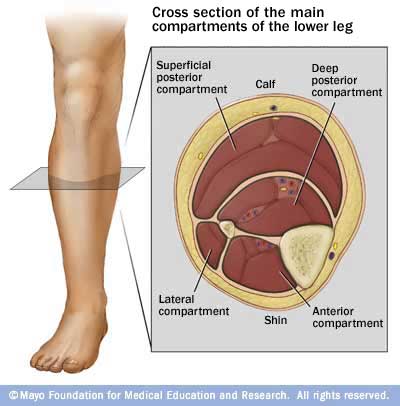
When we exercise, the body pumps blood to the muscles that are being worked, causing the muscles to swell or expand. The muscles are contained within a sheath. You know when you buy meat from the supermarket and it sometimes has that clear, stretchy stuff on it? That clear covering is the sheath. When people with compartment syndrome exercise, there’s not enough room within the sheath for the expanding muscle, therefore pressure builds and pain arises. A friend of mine once used a great analogy – it’s like trying to blow a balloon (muscle) up inside a drink bottle (sheath). It just doesn’t work.
Doing Something About it
I went to my GP who referred me to a specialist sports practitioner, who then referred me to a surgeon who specialised in compartment syndrome. Said surgeon sent me for tests (which, by the way, aren’t covered by ACC as the ‘injury’ is deemed to be progressive – kind of like RSI which, incidentally, IS covered).
Honestly, if there were a best part about having CECS, it would have to be seeing a medical practitioner about this condition and watching their eyes light up when you tell them what you have. It’s not a common condition and I think they get a little bit excited when they get to deal with something different from the norm. I digress!
By the time I got the appointment for pressure tests, I had developed drop-foot (or foot-drop as it’s otherwise known) which is when your foot makes a distinctive “slapping” sound as you walk because you can’t lift the front of your foot properly. I couldn’t walk more than 100 metres without the pain getting so bad I’d have to stop. Ten minutes after ceasing exercise, I was fine – which was probably the single most frustrating thing about the entire condition.
The Pressure Tests
I will not lie. The tests are not pleasant. Basically I had three injections of anaesthetic (in marked spots) into each leg to numb the areas for when the BIG needle gets inserted. I was then told to do an activity that causes the pain and come back to the room once it comes on. The specialist was surprised that I was back within five minutes, even though I’d continued as long as I possibly could because I wanted to be sure I got the results I knew would come.

The second round of injections measure the pressure inside the compartments of your leg. Anything over 30mmHg is “surgery territory”. As a gauge, my worst compartment was ~90mmHg. No wonder I was in so much pain!
As a result of the pressure tests, it was recommended that I be prioritised for surgery and I was placed on a waiting list. Through a mix of medical misadventure and me moving city again (and therefore District Health Board jurisdiction) it took me a further 8 months before I finally got my surgery. Bearing in mind that this was around two years after I had initially consulted my GP, I was virtually unable to walk and had put on a lot of weight – a horrible side affect for someone who used to be so active.
Finally! The Surgery
The technical name for the surgery I had was bilateral tricompartmental fasciotomies, which loosely translates to having three compartments in each leg released. When I say released… they make an incision, then cut open the sheath that holds the muscle in place. It basically allows the muscle to expand as large as it needs to when you’re exercising.
It was an overnight stay in Middlemore Hospital for me (and I’m thankful it was only one night!). When it was time to go home, I actually managed to stand up with my legs supporting my full weight while I got dressed. The only piece of advice I can give you is DON’T DO THIS. You may think you won’t move, but you will and it hurts! I was in a wheelchair to start of with, but given crutches before I left the hospital.
Healing Time
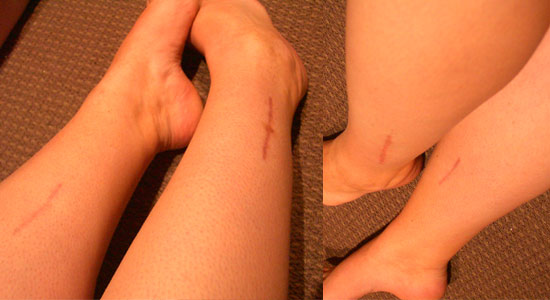
I have two scars on each leg – one on the outside above my ankle bone about four inches long and one on the inside of my leg toward the front about midway up my lower leg – about three inches long.
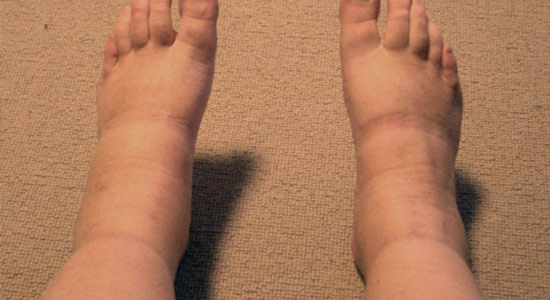
The advice I had read and was given was that it should be around 12 weeks until I could get 100% back into sport. This wasn’t the case for me, however. I went back to work two weeks after surgery (I recommend taking longer – perhaps another week) and even though I held a sedentary position, my ankles and feet would swell up enormously after keeping them “down” for the day, even though I had tried to elevate them as much as I could.
My employer at the time was less than supportive, even though I’d requested that I work from home. If you can, I would definitely aim for three weeks to recover. I was walking without crutches after one week but would still get pain and swelling in the week following. My recovery wasn’t aided by a minor infection in one of the wounds either, so I now have a more prominent scar than I would have otherwise.
Getting back into the Swing of Sport
So, after my two years of not being able to do anything, I was finally free to get back into sport! Unfortunately for me, I don’t think my body was as keen as my mind was and I was bogged down with miscellaneous injuries over the coming year (including prolapsed discs in my back and strained calf muscles). It’s now been around 15 months since I had the surgery and I’m finally uninjured enough to get back on the exercise wagon – enough to hopefully start losing some of the 20kg I packed on over the time I was involuntarily inactive.
Even when running now, I get numbness in my toes and feet. Areas of my leg, ankle and foot are still numb due to the nerves being severed during surgery but I’m hoping to get most of that feeling back. I still get some fatigue and soreness in the same areas as before but nowhere near the amount of agony I was in pre-surgery. My legs are also a funny “shape” because the muscles bulge out in places they didn’t bulge before, but it’s purely aesthetic and I knew to expect that. They are though, still a lot more svelt and “spongey” to the touch than they were pre-surgery. My poor legs.. what an ordeal!
Further Information
If you have any questions, you can contact me or leave a comment on this post.
Here are some websites I found useful:
MayoClinic – Chronic exertional compartment syndrome (Highly Recommended)
Wikipedia – Chronic Compartment Syndrome
EDIT: I have now also created a Facebook page. See https://www.facebook.com/compartmentsyndrome/
277 replies on “Life After Compartment Syndrome”
Never would i have thought someone else would have gone through the same as i have. I bursted into tears reading this. I’d love to share my story. But i wouldn’t know where to begin ?
So glad that there are people blogging and responding about this. It’s a rare syndrome that on average takes years to diagnose. I’m so glad to know I’m not alone on this pain and frustration. Years of it.
If anyone is looking for an alternate to surgery..Dr. Joseph McGinley is a doctor in Casper, Wyoming. He has developed a treatment using botox and has seen a lot of success with the procedure. I went to see him and he is the real deal. Very intelligent, innovative, and kind. I wouldn’t be surprised if his treatment becomes the standard in the future. He had an understanding of the condition that every other doctor I saw did not. Check him out!
http://www.mcginleyinnovations.com/index.php?/dev/services/category/compartment-syndrome
Hi Kyle Im very interested to hear more about your experiences on behalf of my 17 year old so. I recently had a phone discussion with a doctor from Wyoming medical centre and we are minded to go there for treatment
Hi there Guy, I’m sorry I never got back to you. I just happened to revisit this blog and saw your comment! I’m not sure what steps you took for your son since July, but I’d love to fill you in more on my experiences. You can shoot me an email at kyleschwag@gmail.com if you’d like! Best of luck.
This wouldnt help me if I were already herniating quite badly (5-10 per leg). Or would it? My surgery is scheduled in 2 months by a surgeon whose only done it once before. Im a homesteader so my legs are valued.
Hi,
I developed CS after having brain surgery in Sept 2011 (my body was in the wrong position for 9 hours). I had 3 operations following diagnosis, I developed several problems and the hospital left my stitches in for 6 weeks, so they are still internally in my leg and I have been left with a 25 inch scar down my leg and my lower part of my leg does not feel like it belongs to the rest of my leg.
To cut a very long story short, my muscle is now in the wrong position and I am in constant pain, and I mean 24/7. I walk with a stick and have tried most things to reduce the pain including a procedure to kill the damaged nerves in my leg, this unfortunately made the pain worse instead of better.
I am now all out of options for pain reduction, nothing at all has worked. I don’t sleep well because of it, I can’t exercise properly, my life has been turned inside out and upside down because of this.
I now I will have long term problems forever and have even asked the doctors to amputate my lower leg, but they have said not yet. I know that may seem extreme, but if it gets rid of the pain I would have it done.
If anyone has had something done that has helped with the pain, please could they let me know.
I really do hope that if anyone is suffering they get the help they need and I hope anyone who has had recent surgery is on the mend.
Sarah x
6 YEARS ON STILL HAVING PROBLEMS WITH PAIN AND WALKING LEG JUST CANT TAKE BEING ON IT FOR LONG ENDS UP LIKE STIFF LUMP OF LARD HOPE THINGS GET BETTER FOR YOU I AM 56 YEARS OLD NOW AND THING DONT LOOK GOOD FOR MINE LOOKING FOR IDEA’S LIKE THE REST
Sarah, I’m w/ you, everyone I know thought I was being dramatic when I kept saying I’d rather have my leg cut off… if you want to e-mail me I can offer what I’ve done to manage pain
Great to read all of your experiences. I’m 4 months post-op, two compartments each leg plus had to go back in to remove a massive hematoma in one leg, so my recovery was slowed significantly. Just got back out this morning for my first run – felt great, but my legs are swollen to twice their normal size. Swelling has been significant all along! Just wondering how long this has lasted for others. I have no pain at all and full function, but frequently swells up so badly that I can barely bend my legs. Any thoughts? Doc said he’s not concerned just yet, but swelling doesn’t seem to be letting up even after 4+ months.
So glad I found this thread! Had the surgery on my right leg 6 days ago, can’t walk without crutches yet — it hurts too much. I also have some numbness on the top of my foot which is worrisome. Going to the doctor this week for my first post-op appointment.
I had numbness for a while, don’t worry too much yet:)
Hello Lauren, I just had my surgery on Friday, September 4th, 2015. I go back to Dr. Remaly in USF Morsani, Tampa, Fl on September 16th. I also have numbness, burning and sensitivity to touch on my foot and lower leg and wondered how long you had it… Do it go away.
Thanks for any info you can pass along.
That tingling and burning is a good sign, the burning is the last stage of nerve regeneration, unfortunately, numbness and the burning stage can last for months, some people years. Nerve stimulation therapy will help you the most. Tens unit, tapping on leg with fingers, massage.
I am still getting swelling and pain. My ankle and the bottom of my leg, is swollen , and the top of my foot is like someone has prompted up. I am due to have some physio, I am waiting on appointments for it . I went to a review on Wednesday, and they said it was okay, and would be swollen as the Haematoma was removed, but there would be some residue, and due to gravity it will move to the same place as the previous one . They told me to give it till Friday (today,) and if I still had pain and swelling, I was to go to A&E ( The emergency room )
I had a bilateral fasciotomy in December 2011 for compartment syndrome, and was pain free for about a year and a half. When the pain started coming back I was really worried. I had the pressure test done again a few days ago, and the test confirmed that the syndrome was indeed back.
Just curious as to if anyone has had the surgery for a second time and how it went for them? I only had to compartments released last time, and the doctor said this time they would do all four if surgery was to be done.
Would love some advice, had this for waaaay too many years (since mid-2008)
Thanks
Hey Aimee,
I’m actually keen to hear about how you get on. I think I’ve got it back in my right leg but not at a point where I want to do anything about it just yet. Please report back if you do have the surgery a second time – I’d love to know if the outcome is better (and more permanent?) the second time around.
All the best,
Erana
My son is in his sophomore year of college and had one compartment each leg released in March 2014 & is now having pain again, did you have more surgery??
I’m on my firm prescription of painkillers, The wound where they did the evacuation of the haematoma blood clot, hasn’t healed, despite then putting two stitches in it.
I have an appointment to see my consultant on Wednesday coming, so need to make him aware that it isn’t healing, so they may have to put some more stitches in.
My leg also still go solid when I set up properly, they told me to keep it elevated as much as possible, but that’s quite difficult
Hi hope your leg is healing! doesn’t sound too good! Can you move your ankle round and back and forward? Im surprised that you aren’t getting physio as that’s what got me right, as I thought I was getting a blood clot! Its now 6 weeks since my op. I a walking without crutches and without a limp, I still have to be careful not to over doing it as my ankles swell up. my left leg calf still swollen but so much better. go back and see my surgeon next week I hope he gives me the all clear to drive. All the best Matt
Matt, I had a similar experience with a hematoma – sad to say it slowed my recovery down a lot. I too still had the same symptoms even after the hematoma was removed, swelling, pain, pressure, hardening for at least a week but it finally subsided.
4 months later, I still have a lot of swelling, but am very glad I had the surgery, eventhough I questioned it and regretted it at first. Your recovery sounds a lot like mine, so hopefully you will see some good results soon. Be patient, it took me MUCH longer than the 3 weeks my doctor originally told me, but getting there!
hi its June here again Im in week 5 now, and im walking without the crutches still having phyiso twice a week. My left leg swelling coming down, just get a little sore if doing too much during the day, and tend still. other wise feeling great.
I am still suffering with swelling of the calf and it going hard.
I have been told to elivate it as much as I can.
It’s starting to get to me now and I wish I had never had the surgery.