I’m not a marathon runner. In fact I don’t really even think I’m that much of an athlete. However I have suffered from chronic exertional compartment syndrome and have since had surgery to correct it. I thought I’d write about my experience here in the hopes that someone might find it useful.
A Little Bit of History
I was very active, mostly with a lot of squash, premier netball, as well as the odd game of touch rugby. I had had a tightening of what I thought were the muscles on the outside of my legs for some time and had asked various people if they knew how to stretch them. I’m fairly au fait with anatomy after studying it at school but even I couldn’t figure it out. They’d been uncomfortable mostly while I was playing netball, but I put it down to not being as fit as I could be and put up with the pain.
It wasn’t until one day I was playing squash when the pain got so bad I had to come off the court. Luckily the manager of the team I was training with happened to be a physiotherapist and mentioned that the symptoms I was describing sounded like compartment syndrome. I was training for squash nationals and playing finals netball so I didn’t want to stop. I’m also fairly stubborn when it comes to pain stopping me doing things (says the girl who walked home one day with two badly sprained ankles!) so I didn’t treat this any differently.
With squash nationals done and dusted, I moved away from the city where I first heard about compartment syndrome a few months later but began to research it online. It wasn’t until one day I left the squash court and ended up on the floor in tears from the pain that I knew I had to do something about it.
What causes the pain?
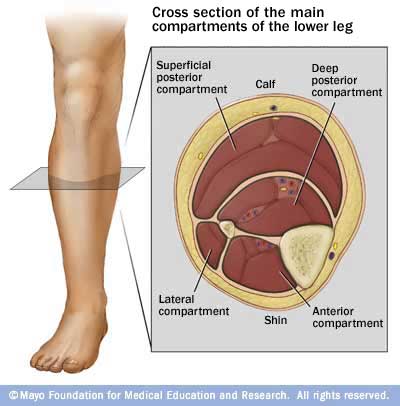
When we exercise, the body pumps blood to the muscles that are being worked, causing the muscles to swell or expand. The muscles are contained within a sheath. You know when you buy meat from the supermarket and it sometimes has that clear, stretchy stuff on it? That clear covering is the sheath. When people with compartment syndrome exercise, there’s not enough room within the sheath for the expanding muscle, therefore pressure builds and pain arises. A friend of mine once used a great analogy – it’s like trying to blow a balloon (muscle) up inside a drink bottle (sheath). It just doesn’t work.
Doing Something About it
I went to my GP who referred me to a specialist sports practitioner, who then referred me to a surgeon who specialised in compartment syndrome. Said surgeon sent me for tests (which, by the way, aren’t covered by ACC as the ‘injury’ is deemed to be progressive – kind of like RSI which, incidentally, IS covered).
Honestly, if there were a best part about having CECS, it would have to be seeing a medical practitioner about this condition and watching their eyes light up when you tell them what you have. It’s not a common condition and I think they get a little bit excited when they get to deal with something different from the norm. I digress!
By the time I got the appointment for pressure tests, I had developed drop-foot (or foot-drop as it’s otherwise known) which is when your foot makes a distinctive “slapping” sound as you walk because you can’t lift the front of your foot properly. I couldn’t walk more than 100 metres without the pain getting so bad I’d have to stop. Ten minutes after ceasing exercise, I was fine – which was probably the single most frustrating thing about the entire condition.
The Pressure Tests
I will not lie. The tests are not pleasant. Basically I had three injections of anaesthetic (in marked spots) into each leg to numb the areas for when the BIG needle gets inserted. I was then told to do an activity that causes the pain and come back to the room once it comes on. The specialist was surprised that I was back within five minutes, even though I’d continued as long as I possibly could because I wanted to be sure I got the results I knew would come.

The second round of injections measure the pressure inside the compartments of your leg. Anything over 30mmHg is “surgery territory”. As a gauge, my worst compartment was ~90mmHg. No wonder I was in so much pain!
As a result of the pressure tests, it was recommended that I be prioritised for surgery and I was placed on a waiting list. Through a mix of medical misadventure and me moving city again (and therefore District Health Board jurisdiction) it took me a further 8 months before I finally got my surgery. Bearing in mind that this was around two years after I had initially consulted my GP, I was virtually unable to walk and had put on a lot of weight – a horrible side affect for someone who used to be so active.
Finally! The Surgery
The technical name for the surgery I had was bilateral tricompartmental fasciotomies, which loosely translates to having three compartments in each leg released. When I say released… they make an incision, then cut open the sheath that holds the muscle in place. It basically allows the muscle to expand as large as it needs to when you’re exercising.
It was an overnight stay in Middlemore Hospital for me (and I’m thankful it was only one night!). When it was time to go home, I actually managed to stand up with my legs supporting my full weight while I got dressed. The only piece of advice I can give you is DON’T DO THIS. You may think you won’t move, but you will and it hurts! I was in a wheelchair to start of with, but given crutches before I left the hospital.
Healing Time
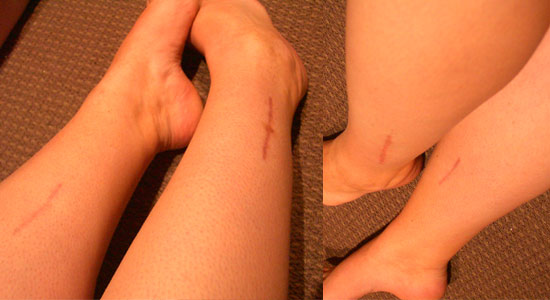
I have two scars on each leg – one on the outside above my ankle bone about four inches long and one on the inside of my leg toward the front about midway up my lower leg – about three inches long.
The advice I had read and was given was that it should be around 12 weeks until I could get 100% back into sport. This wasn’t the case for me, however. I went back to work two weeks after surgery (I recommend taking longer – perhaps another week) and even though I held a sedentary position, my ankles and feet would swell up enormously after keeping them “down” for the day, even though I had tried to elevate them as much as I could.
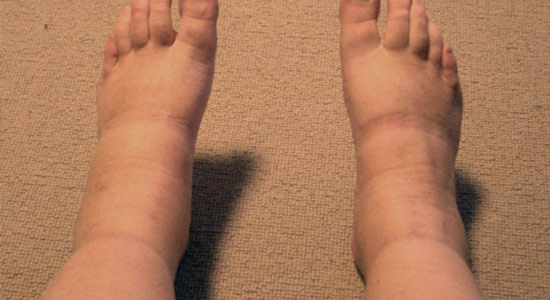
My employer at the time was less than supportive, even though I’d requested that I work from home. If you can, I would definitely aim for three weeks to recover. I was walking without crutches after one week but would still get pain and swelling in the week following. My recovery wasn’t aided by a minor infection in one of the wounds either, so I now have a more prominent scar than I would have otherwise.
Getting back into the Swing of Sport
So, after my two years of not being able to do anything, I was finally free to get back into sport! Unfortunately for me, I don’t think my body was as keen as my mind was and I was bogged down with miscellaneous injuries over the coming year (including prolapsed discs in my back and strained calf muscles). It’s now been around 15 months since I had the surgery and I’m finally uninjured enough to get back on the exercise wagon – enough to hopefully start losing some of the 20kg I packed on over the time I was involuntarily inactive.
Even when running now, I get numbness in my toes and feet. Areas of my leg, ankle and foot are still numb due to the nerves being severed during surgery but I’m hoping to get most of that feeling back. I still get some fatigue and soreness in the same areas as before but nowhere near the amount of agony I was in pre-surgery. My legs are also a funny “shape” because the muscles bulge out in places they didn’t bulge before, but it’s purely aesthetic and I knew to expect that. They are though, still a lot more svelt and “spongey” to the touch than they were pre-surgery. My poor legs.. what an ordeal!
Further Information
If you have any questions, you can contact me or leave a comment on this post.
Here are some websites I found useful:
MayoClinic – Chronic exertional compartment syndrome (Highly Recommended)
Wikipedia – Chronic Compartment Syndrome
EDIT: I have now also created a Facebook page. See https://www.facebook.com/compartmentsyndrome/
277 replies on “Life After Compartment Syndrome”
OMG! I’m so glad I found your blog – no one can really understand the pain of compartment syndrome until they’ve been through it. When I was first diagnosed my specialist hadn’t seen compartment syndrome in over 10 years! I had my first surgery in 2006 which left a scar about 8cm long. Have had a further 3 surgeries on the same spot over the last 8 years and now my scar is the entire length of my lower leg – some 30cm! My first surgery fixed the problem however when all the pain came back and they couldn’t work out why they had to cut me open again. It was then that they found out my body produces too much scar tissue and the scar tissue was strangling the nerve in my leg so they scraped it clean. Same thing happened again so for the 3rd op I was a bit of a guinea pig – after scraping my nerve clean again they wrapped a membrane around it. Back then, the membrane was a new thing and it was meant to deter the scar tissue from attacking the nerve….but to no avail. After many consults, 2nd and 3rd opinions and numerous xrays, MRI’s, nerve conduction studies, etc my last op in 2012 was to cut the nerve out so the scar tissue could not attack it any more – only a sensory nerve so still have control (no drop foot) but half my leg is numb permanently which is ok with me and it is weak – I sometimes have to remind myself to lift my leg when I walk.
Unfortunately, as a result of all the surgery my veins have been traumatised and I have now developed Chronic Venous Insufficiency 🙁 It never ends. And I’m still in pain as the scar tissue keeps forming and leg keeps swelling. I have to plan my day as I can’t walk more than 1km without being in excruciating pain. 10 years of this and I’m sooooo over it. Sorry for the rant but it is so mentally and physically draining – no exercise for 10 years, I too have put on so much weight – depression kicked in as well. Not that I wish this pain on any of you, it is nice to know there are others out there going through the same thing.
Dulcie, Sorry to hear of your problems with this awful disorder.
I too have had CCS since 2010 and my surgeon is the best out there. Dr Turnipseed from Madison Wi.
After I broke my ankle and hopped on my left leg for almost 10 weeks!! I have had 6 compartment releases from 4/2010 to 10/2012, My last one I felt pretty good for about 1 month then started to experience the same, just not as bad, but bad enough where standing at work all day is very painful.
I’ve had numerous tests done over the years. The latest was “Nerve ultrasound” and Vein ultrasound which they found I have a neuroma on my left leg where I had a bleed from the 3rd surgery where they they went in to do another fasciotmy. The Dr said he went in blind to release some scar tissue while he was in their!! He said he learned from that mistake!! Thanks Dr Turnipseed!
He did find that people with CCS, also have venous issues as well, he said he sees it all the time in these young kids, Im in my early 50’s and also have Reflux of the deep vein in my left leg but not in my right leg, even though it aches and does get cramps in it. Also just waking up in the morning, my legs ache. So in mid November I will have a “nerve conduction test” done on my right leg to see if a nerve is getting pinched. He said this is the last test that he can do.
So if it does come out negative, I’m going to have to learn to live with this!! Im going to have to come to turns with this or else it will consume me, which his has for the last 4 yrs.
I take 400mg ibuprofen q morning and 2 tramadol in am, aft and 1 in pm most days, and take hydrocodone 5/325 after work and have for almost 2 yrs. It has been tough, but a little helpful to read that other people are going thru the same thing I am, so at least I know Im not crazy.
I also did have the Dr check my pressures which are right leg 8mmhg, 10 and 17mmhg and right leg is 8,12 and 14. Which he said is normal even though I do read 0 to 12 is the normal.
I wish the best to everyone!
Tracy
Im schedued for the neuroma to be removed in December and a plastic tube like device that he will put in between the nerves, so each end will grow into it.
Hi all,
Incredible to read all these posts. I generally fall asleep doing research about my pains. I’ll make this brief and would so much appreciate a response. 23 Y/O male. Active, heavy. Ankle sprain, boot immobilization, then compartment syndrome incredibly high readings – released both legs. Recovery took forever but was successful (mostly) A year later, right peroneal nerve “entrapped” so surgeon decompressed or “cleaned” it out like Duclie mentioned. Now, 4 years later, another ankle sprain, probably too much ice and immobilizing again, the ankle is FINE but the upper peroneal nerve area is CHRONIC discomfort and now I’m nervous that when I run just to test things out, my lower leg compartments get tight again. Any way to avoid both surgeries again? Think these issues can improve without operation? I’m all over the PT, Accu, massage, stretching. Would love some feedback. Bless all you struggling people – let’s all please stay strong always.
Wish I had chronic compartment syndrome and the surgeons had caught it. Unfortunately I had severe acute compartment syndrome from my waist down. I had spine surgery and woke up with bilat leg compartment syndrome. The surgeons ignored my pain and my complaints, the respiratory and kidney failure. They didn’t do surgery. They covered it up and destroyed records to save their reputations. I have nerve, muscle and artery/vein/capillary damage. I take 24 hr morphine, Norco, Neurontin, ambien, valium, I have an implanted nerve stimulator. I have to sleep in a recliner in a straight position. I cannot put any pressure on the sides of my legs or have blankets on my feet.I cannot walk up hill, sit straight up for long or on hard surfaces, bend at the hip, squat , kneel, anything that increases the need for oxygen use in my legs or further diminishes oxygen supply in my legs. I have scar tissue that can be felt encircling both thighs 2 inches above the knees and encircling both ankles. You can also feel several fascia herniations, Intermittent compression devices were left on for 5 days without a break. I suffer from neuropathic paih, ischemic pain and muscle spasms
I was diagnosed with shin splints over 12 years ago and they would never heal. I used to be a long distance runner and had to stop. I play soccer religiously and was only playing about 25% because of the pain. I stumbled across Compartment Syndrome, went to a sports Dr, and had surgery on both legs. They said I would walk out of surgery. I did not. I am really good with taking pain and am 41 but it took me about 1 month to even walk kind of normal. The pain from surgery was unbelievable. But, well worth it.
I am now playing much better. I feel about 90%. I still have pain and have read that sometimes people need a 2nd surgery. There is no way I would do it again but I am very glad I did it the first time. I only wish Dr’s knew what it was and told me years ago. Oh well, life goes on. I will exercise until the day I die. I believe that the your body is more important than most things in life and you need to do maintenance once in a while. If you can’t run, you get fat, out of shape, and can’t keep up with your kids.
Point is, I am really glad I had the surgery. I am not a professional, just believe in health.
Greetings!
I am a 47 year old female who had the bilateral fasciotomy on July 7th, 2014. It was out-patient surgery and went home right after. I was only off work for 4 days before I went back – 1/2 days at first. I sit at a computer all day, so I was able to just prop up both legs and sit there doing my work. (Still with pain meds, I might add!)
The first 24 hrs were the worst – dizziness when standing, walking gingerly and only when necessary, but aside from swelling for about the first two weeks, I had no pain, no pins and needles, etc. I just had to stay off my feet and keep my legs elevated as much as possible.
My incisions itched a lot as the scabs started to form, but again – no pain. I felt like I was physically able to at least start walking around the neighborhood about 3 weeks after, but my doctor doesn’t want any exercise until 12 weeks out. Yes, I have put on weight from being so sedentary. 16 lbs!! But, to be fair, I have pretty much been eating whatever I want and “treating” myself during this long recovery.
I don’t know what a difference the surgery has made yet, as I’m still waiting to get going again. But as far as the experience of the surgery and recovery – I didn’t think it was that bad. Three c-sections I had in the 90’s were a lot worse to go through than this :). My pressure was 50+ in one leg and 80+ in the other before surgery.
We are quite the club, aren’t we?!?! Prayers for us all as we continue toward recovery. 🙂
Hi people
Crazy to see so many incidents of CS around! Goes to show how common it is. I know a lot of people with “shin splints” so it makes sense to have a few less with sever conditions or known as CS.
I’m 23 and I’ve always been very active, whether its on the rugby field, gym or just running. I played 85kg rugby for 2 years and in this period I had to diet and do about 5 hours of cardio a week just to keep underweight and that doesn’t include the game! I have always had tight calves and hamstrings so I put my soreness over the years down to that. I would get a small fracture in my tibia in 2013 so I rested up and assumed it was just shin splints. I received a lot of physio for it and it would go away but then come back so I knew there was an underlying condition.
Lucky for me I had the original calf injury under ACC so all of the consultations with specialists, surgeons and the actual test were free (apart from the test). My anterior compartment readings were high but not as high as some of the people on here. My posterior was not as high but wouldn’t release after the 10 minute period so we decided to get it cut while I was at it. So for 3 cuts all up on both legs is going to cost 8k through a private hospital. Luckily insurance will cover 80% but still leaves me with a decent sum. So I am going to get my surgery done in a few months.
I am hoping that, while mine is not sever as others on here and I am only in pain when running or long distance walking, I am able to recover to normal levels of activity without pain within the next year. May be a bit optimistic but who knows.
Good luck for everyones recovery.
Hi Kurt,
I was interested to see you post and hope surgery went well. My son is 16 and has just had surgery recommended. We live in Auckland. Are there any surgeons with experience with compartment exertional syndrome that you could suggest? If so, we’d be very keen to hear who they are (Auckland or anywhere in New Zealand).
Thanks
Rob Graham
email: rob.graham@hnzc.co.nz
mobile: 021 487 230
WOW, I didn’t realize there were so many people out there suffering the same thing I am….I’m 37yrs old and have had “shin splints” since I was 17. Just found out about 4 months ago it is actually compartment syndrome. Its gotten so bad that walking 50 ft will cause the pain to come on. Even driving for too long starts to hurt now. My children are small and we are a very active/athletic family. It makes it really difficult to keep up with them – 13yrs, 6yrs, and 4yrs.
I’m kinda nervous about the surgery. My surgeon says he’s never seen a case this bad and is not sure of the long term – untreated – effects might be. I just want to be able to play with my kids and remain active. I love circuit training – I want to be able to do this without the pain.
In the mean time, any advise on pain control? Other than “if it hurts, stop”. I can’t stop life… I take Celebrex everyday for pain – not much help.
Thanks
hi i also suffer from chronic compartment syndrome =( i have for the past year and a half. i first got it when i was 21 i was training for a 14km run with a friend and working 12 hours a day on hard floors, i continued this for three months, until one day i sat down on the couch and felt horrible pain and tightness in both my lower legs, it instantly brought me to tears and my legs blew up like balloons. i was frightened and getting horrible cramps and pins and needles, more so in my right leg than my left. i stopped running, but continued training on other equipment, like the bike or row machine. i’d never really been a physical person, i walked most nights with my mum, and did circuit three days a week for about four months, prier before i teamed up with a friend to train for a run, so i guess the running was a bit of a shock to my body. for a long time i didn’t actually know what i had, i just stopped running and continued to work long hours. i eventually went on holidays taking six weeks off, but still the pain or swelling did not subside and it didn’t matter how many pain killers or iburphen tablets or creams i used or took would rid the problem.
when i returned home, i went back to the doctors, he told me to try massage, acupuncture, dry needling and yoga. dry needling brought a lot of my swelling down and caused me a lot of pain, but i still had symptoms of an on going issue. eventually due to, to much pain i was fired from my job as they wouldn’t allow me to cut back my hours, so there for i was terrified to go to work due to the pain i was in. (by the way my job was a barista and at the time was 21 years old i am now turning 23). anyway long story short, losing my job made me march back to the doctors, i was given a referral for a surgeon & compression test. my readings are 47 and rising post exercise and wouldn’t drop below 37 after rest in my anterior compartments in both legs, so am now on a waiting list for surgery at some point this years which excites me as this problem has caused me to move back home with my parents and am only at this point capable of working 5 hours a day, i continue to walk and sometimes ride a bike, and i take magnesium, fish oil & make plenty of ginger & orange juices, drink lots of water and try and eat as clean and healthy as i find it helps slightly with the pain and also its not the greatest tasting thing but mixing as much turmeric powder as i can stand in natural greek yoghurt AS its a great anti inflammatory. its sounds crazy i know, but i’d rather avoid pain killers as much as i can as i don’t want my body becoming immune to them or realliant on them, but if anyone who is suffering this injury/condition pretty sure like myself you try anything to make it bare able, i always wear compression too and good cushioned sneakers…..the days of high heels, jeans & dresses are behind me … until surgery day … i am super nervous and my dad is dead against it, they don’t really understand, but no one does until there the ones who have it …. by far its the worst thing i have ever had to cope with =(
Hi
I can’t believe there are so many people with this condition. It took around a year and thousands of dollars before I received a diagnosis. In the end it was a physiotherapist who diagnosed me by looking at my legs as I walked! I was even told it had to be cancer in both my legs, and as I underwent the tests I thought that would explain the pain.
As people have described, the pain comes on with exercise/activity, in particular in my case it was when I walked up hills or even slight inclines and walking or running up stairs in particular was the worst.
I don’t like running and never have so my condition wasn’t sports related. I first noticed an increased tightness in my calf’s, pain when walking, night pain, pins and needles and that ache!
Your Dad won’t understand the pain, which was really bad. I am so sorry you are going through it. It is like an intense cramp. I remember having to ring someone to come get me when I was in town because I couldn’t walk back to my car.
You feel like you are going mad because you don’t know anyone that has gone through it, especially without an accident related compartment syndrome. It was worse pain than any fracture/sprain/torn tendons I have had (yes I am a bit accident prone)
I underwent bilateral anterior fasciotomy about 10 years ago when I was about 25. I have had surgery’s before and this was pretty painful afterwards, but not for too long. The scars are pretty impressive initially, but don’t worry because they have really settled down. My recommendations are:
– Take at least 3 weeks off work and don’t go walking anywhere far from the couch. Rest up over those three weeks and put your feet up. You won’t have a choice initially because it is too sore to walk! I only rested for two weeks, thought I could walk around again, and ended up with severe swelling in my feet and blood poisoning. My legs ended up like putty – you could leave your hand print in them!! Yuck.
– when the scars heal – about 6 weeks or when there is no open wound/exposed skin- use bio-oil or vitamin E oil. It really helped reduce the redness. But i still have four pretty obvious, with a couple of deep scars in my legs. Saying that ten years on the scars are a lot less obvious – for example in photos you have too look for them to notice them.
– Don’t go back to strenuous activity/gym/running too soon. You really do not want to undo the surgery because it isn’t something you want to repeat if you can avoid it.
– the surgery involves cutting nerves, so don’t be too alarmed because you have lost a bit of sensation where the surgery was. For example when you shave your legs you couldn’t really feel it. The feeling/sensation does come back but it took a long time. Where the surgery was is still really sensitive if you bump your leg, but no biggy.
Things I have noticed 10 years on:
– Yeah I have scars but I can walk with minimal discomfort which is more important – I walk about an hour a day now to and from work.
– my lower legs are sensitive if bumped
– I have pins and needles in my feet – more so at night/evening when you are resting. Again not a biggy.
– sometimes my legs ache at night. This was more regular just after the surgery, but certainly has gotten better years on. For example I can go months without any pain at night, but then it comes on for a few weeks during the night.
– flat shoes for more than one day cause me grief (like wearing jandles for weeks) Flat shoes are better if they have a good insole or are a sneaker type thing.
– high heels are fine now – but not ridiculous ones – more like ziera heels…even at your age there may be a pair you like?!
– wearing tights or skinny jeans seems to be a good thing – it’s like the compression/tightness relieves the uncomfortable ache that sometimes happens.
The most important thing is I couldn’t not have coped with that pain for any longer. The surgery has enabled me to nearly live the life I had before this condition came on. The surgeon told me at the time he hadn’t seen a case as severe so I am grateful that I could have it done.
You shouldn’t have the massage on the areas that have the compartment syndrome, it hurts like hell when they are doing it, and it is not making it better. Having a massage is for muscle pain/strains. Although the compartment syndrome is because your muscle grows too big for the muscle sheath and the pain is when the blood cannot flow, rubbing the muscle won’t help. Your GP may not understand what this condition is if he recommended that?!
I don’t take pain killers now. I do take vitamins, including vitamin D, which helps with muscles and overall pain. I think it helps. Unfortunately it most likely won’t make a bit difference before you have the surgery.
All the best for the surgery, and you should know it will get better. Also you don’t want to get into the mindset that the pain won’t go away after the surgery, sometimes if you tell yourself that it will come true.
I think that’s all I have to say about it really. Ask me any questions if you have them.
Take care
Cath
I have chronic compartment syndrome in both legs. After four years of trying everything of treatment I finally got the operation. So three weeks ago I had my right leg done, fasciotomy of all four compartments. I have two scars, one on the inside and one on the outside, both are about 10 cm. The scar have healed very well, but I have reduced/none skin-sensibility around the scar on the inside. The doctor said it’s normal, because superficial nerves in the skin area are damaged during the surgery, but this will be back to normal within the first year. The leg is still swallowed, especially on the outside of the foot. But the leg don’t feel hard, it feels more like touching a water ballon (almost like non-pitting edema if you know what that is). This is also normal, the doctor said it should be better after a few months but it could take longer. At this point I feel optimistic about the surgery! If this works they will operate the other leg as well.
Fasciotomy of ALL four compartments are recommanded at my hospital, even if you only have symptoms from one or two compartments. It’s recommanded because if one compartment is affected, usually the others are also affected. If they only do fasciotomy of one compartment, they may have to reoperate the other compartments later. They also only operate one leg at time, then you can feel the difference and be you’re own “answer”. (And you don’t have to use a wheelchair).
I am getting a fasciotomy in both legs also after at least 20 years of pain of varying severity (i’m 38), I’ve never been at all athletic and in recent years have been overweight due to lack of exercise and comfort eating. Of course, this makes the pain worse. It took a long time to get diagnosed, I have been through very expensive podiatry, including at least 6 different sets of orthodics. I had venal surgery a month ago and will have the other surgery in the next few months before i move overseas in july. Have joined this group https://www.facebook.com/groups/497289303708928/
Hi
I have chronic compartment syndrome and have had this for about 8 years. I had a fasciotomy done on both of my shins 4 and a half years ago – doctor told me to start walking immediately after surgery in order to aid the recovery. The surgery however failed in one leg and a nerve got trapped so I had the surgery repeated and my nerve released on just one leg a year later. Now more than 3 and a half years later I still get the pain after exercise. As a national athlete in the UK this condition is extremely frustrating although I have found the key for me is to limit high impact activities when possible and to break up these with low impact activities. I do not think there is a cure for this although stretching after activity helps to reduce the pressure.