I’m not a marathon runner. In fact I don’t really even think I’m that much of an athlete. However I have suffered from chronic exertional compartment syndrome and have since had surgery to correct it. I thought I’d write about my experience here in the hopes that someone might find it useful.
A Little Bit of History
I was very active, mostly with a lot of squash, premier netball, as well as the odd game of touch rugby. I had had a tightening of what I thought were the muscles on the outside of my legs for some time and had asked various people if they knew how to stretch them. I’m fairly au fait with anatomy after studying it at school but even I couldn’t figure it out. They’d been uncomfortable mostly while I was playing netball, but I put it down to not being as fit as I could be and put up with the pain.
It wasn’t until one day I was playing squash when the pain got so bad I had to come off the court. Luckily the manager of the team I was training with happened to be a physiotherapist and mentioned that the symptoms I was describing sounded like compartment syndrome. I was training for squash nationals and playing finals netball so I didn’t want to stop. I’m also fairly stubborn when it comes to pain stopping me doing things (says the girl who walked home one day with two badly sprained ankles!) so I didn’t treat this any differently.
With squash nationals done and dusted, I moved away from the city where I first heard about compartment syndrome a few months later but began to research it online. It wasn’t until one day I left the squash court and ended up on the floor in tears from the pain that I knew I had to do something about it.
What causes the pain?
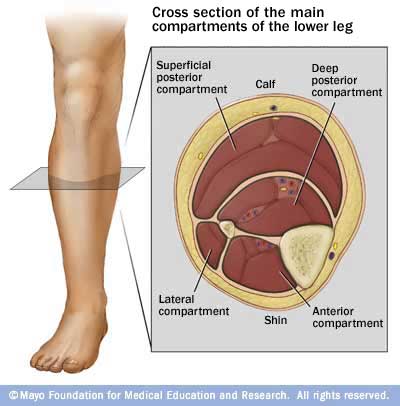
When we exercise, the body pumps blood to the muscles that are being worked, causing the muscles to swell or expand. The muscles are contained within a sheath. You know when you buy meat from the supermarket and it sometimes has that clear, stretchy stuff on it? That clear covering is the sheath. When people with compartment syndrome exercise, there’s not enough room within the sheath for the expanding muscle, therefore pressure builds and pain arises. A friend of mine once used a great analogy – it’s like trying to blow a balloon (muscle) up inside a drink bottle (sheath). It just doesn’t work.
Doing Something About it
I went to my GP who referred me to a specialist sports practitioner, who then referred me to a surgeon who specialised in compartment syndrome. Said surgeon sent me for tests (which, by the way, aren’t covered by ACC as the ‘injury’ is deemed to be progressive – kind of like RSI which, incidentally, IS covered).
Honestly, if there were a best part about having CECS, it would have to be seeing a medical practitioner about this condition and watching their eyes light up when you tell them what you have. It’s not a common condition and I think they get a little bit excited when they get to deal with something different from the norm. I digress!
By the time I got the appointment for pressure tests, I had developed drop-foot (or foot-drop as it’s otherwise known) which is when your foot makes a distinctive “slapping” sound as you walk because you can’t lift the front of your foot properly. I couldn’t walk more than 100 metres without the pain getting so bad I’d have to stop. Ten minutes after ceasing exercise, I was fine – which was probably the single most frustrating thing about the entire condition.
The Pressure Tests
I will not lie. The tests are not pleasant. Basically I had three injections of anaesthetic (in marked spots) into each leg to numb the areas for when the BIG needle gets inserted. I was then told to do an activity that causes the pain and come back to the room once it comes on. The specialist was surprised that I was back within five minutes, even though I’d continued as long as I possibly could because I wanted to be sure I got the results I knew would come.

The second round of injections measure the pressure inside the compartments of your leg. Anything over 30mmHg is “surgery territory”. As a gauge, my worst compartment was ~90mmHg. No wonder I was in so much pain!
As a result of the pressure tests, it was recommended that I be prioritised for surgery and I was placed on a waiting list. Through a mix of medical misadventure and me moving city again (and therefore District Health Board jurisdiction) it took me a further 8 months before I finally got my surgery. Bearing in mind that this was around two years after I had initially consulted my GP, I was virtually unable to walk and had put on a lot of weight – a horrible side affect for someone who used to be so active.
Finally! The Surgery
The technical name for the surgery I had was bilateral tricompartmental fasciotomies, which loosely translates to having three compartments in each leg released. When I say released… they make an incision, then cut open the sheath that holds the muscle in place. It basically allows the muscle to expand as large as it needs to when you’re exercising.
It was an overnight stay in Middlemore Hospital for me (and I’m thankful it was only one night!). When it was time to go home, I actually managed to stand up with my legs supporting my full weight while I got dressed. The only piece of advice I can give you is DON’T DO THIS. You may think you won’t move, but you will and it hurts! I was in a wheelchair to start of with, but given crutches before I left the hospital.
Healing Time
I have two scars on each leg – one on the outside above my ankle bone about four inches long and one on the inside of my leg toward the front about midway up my lower leg – about three inches long.
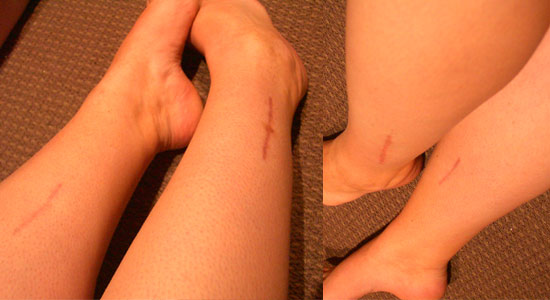
The advice I had read and was given was that it should be around 12 weeks until I could get 100% back into sport. This wasn’t the case for me, however. I went back to work two weeks after surgery (I recommend taking longer – perhaps another week) and even though I held a sedentary position, my ankles and feet would swell up enormously after keeping them “down” for the day, even though I had tried to elevate them as much as I could.
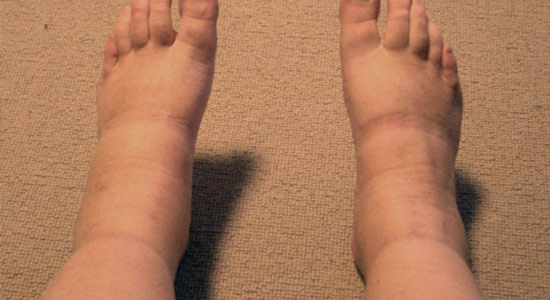
My employer at the time was less than supportive, even though I’d requested that I work from home. If you can, I would definitely aim for three weeks to recover. I was walking without crutches after one week but would still get pain and swelling in the week following. My recovery wasn’t aided by a minor infection in one of the wounds either, so I now have a more prominent scar than I would have otherwise.
Getting back into the Swing of Sport
So, after my two years of not being able to do anything, I was finally free to get back into sport! Unfortunately for me, I don’t think my body was as keen as my mind was and I was bogged down with miscellaneous injuries over the coming year (including prolapsed discs in my back and strained calf muscles). It’s now been around 15 months since I had the surgery and I’m finally uninjured enough to get back on the exercise wagon – enough to hopefully start losing some of the 20kg I packed on over the time I was involuntarily inactive.
Even when running now, I get numbness in my toes and feet. Areas of my leg, ankle and foot are still numb due to the nerves being severed during surgery but I’m hoping to get most of that feeling back. I still get some fatigue and soreness in the same areas as before but nowhere near the amount of agony I was in pre-surgery. My legs are also a funny “shape” because the muscles bulge out in places they didn’t bulge before, but it’s purely aesthetic and I knew to expect that. They are though, still a lot more svelt and “spongey” to the touch than they were pre-surgery. My poor legs.. what an ordeal!
Further Information
If you have any questions, you can contact me or leave a comment on this post.
Here are some websites I found useful:
MayoClinic – Chronic exertional compartment syndrome (Highly Recommended)
Wikipedia – Chronic Compartment Syndrome
EDIT: I have now also created a Facebook page. See https://www.facebook.com/compartmentsyndrome/
277 replies on “Life After Compartment Syndrome”
how long do i have to wait until i can start lifting weights with my legs or in on my shoulders(squats)
Our stories are very close! I spent almost three yrs after marathon training crying to doctors that something was wrong. Eventually I got the same tests you did and was scheduled for surgery. It’s been over three years and now I have a 7th month old. The pain is back, unbearable, and I’m hoping for more surgery. The weight gain is extremely frustrating. And it gets worse, the entire time I was struggling with the leg pain, I had an undiagnosed thyroid problem.
I hope your sports are going well!
Great blog!!!
Hi. I just got my diagnostic tests and I am waiting for surgery. I am so nervous to get it done. Is it difficult to walk immediately after, or is it just painful? I must admit I had a lot of anxiety reading your post. I am very active, and at this moment I find it difficult to run or snowboard, but I seem to work through the pain. Do you recommend the surgery?
Hi Amy,
You would not want to walk immediately after – you have stitches in the wounds and it’s very painful! Until I left the hospital I was using a wheelchair.
I would always recommend the surgery, because with the point I was at there was no way I could work through the pain. I always think that even a small chance to make it better is better than no chance of getting better at all. I am so much better (though not 100%) than I was pre-surgery.
I hope this allays some of your anxiety! All the best.
Advice?
I am wondering if anyone had it just by exercising or walking?
My symptoms started in early 2012.
I worked in a warehouse for 10hrs standing all day.
Well I stopped working September 2012 felt like someone set my calves on fire and they would throb.
The pain and symptoms went away and return whenever I go out to the mall and walk or if i’m standing.
I finally was referred to Ortho after being seen 4 time’s by my Gp we have ruled out DVT. I go an Xray Monday, I have a bone scan Friday then another appointment with Ortho Next Thursday. I am really nervous bc I HATE needles.
the pain I feel after walking is throbbing and burning sensation. To get relief my husband will sit on my calves for about 4 mins until they go numb. When he gets up it’s so reliefing I feel the blood to where it needs to go. Is the Cs feels like? I am just trying to get all the info I can. Not really much out there on Cs.
Thank you!
Hi yes my compartment syndrome came on with just walking. I wasn’t into exercise at the time at all, just walked a bit. I hope you have had the test for compartment syndrome by now? It took over a year, thousands of dollars and some pretty insane opinions from Dr’s before they got it right for me!
Hi Crystal,
I would suggest reading a bit about Popliteal Artery Entrapment Syndrome. It’s what I have and it was misdiagnosed as compartment syndrome at first.
Some of the things you said are familiar, like how pressure makes it feel better, and the prolonged standing you do for work. PAES is a very rare condition so many doctors wont even know what it is and wouldn’t look for it. It couldn’t hurt to try. It is diagnosed with a special MRI that uses contrast to see the blood flow when you point and pull up your toes.
I hope you find answers, and if you have any questions you can check out my blog and message me: popliteal-artery-entrapment.blogspot.com (I’ve just decided to start this so it is still fresh)
Glad to see this blog still being kept alive by the comments – wish I had of found it sooner, although a lot of bad experiences it seems… So maybe it was best I only found it now.
Here is my story.
I had a bilateral fasciotomy to my anterior compartments (front compartments on both legs) about four weeks ago.
I’ve always suffered from pain whenever I ‘tried’ to run so never really got I to running and never really thought much of the pain. It wasn’t until I started setting some goals for myself that it started to begin to be more of a problem. I managed a few half marathons and a full Marathon over a 12 month period. I could typically run through the pain but it started to get worse affecting me when walking and driving so I decided to start finding out why.
It took about two years of various specialists to get diagnosed. I was happy to get a diagnosis that explained my pain but I have to admit the decision to have surgery was a bit harder.
I live in Auckland, NZ and was covered by my insurance so was able to go private. I think it was around $7k all up. God knows what I spent in the lead up to getting a diagnosis mind you!
My experience so far has been generally good.
I had one night in hospital. When I woke up I my legs were bandaged up so couldn’t see what they had done, and there were drains coming out if each leg pumpin out blood. It was at first a bit freaky. The pain wasn’t too bad. The drains were taken out and then I came home under instruction to keep the weight of my feet as much as I could – this wasn’t really an issue for the first few days as the drug knocked me round a bit. Standing wasn’t to painful but sitting/walking was so I limited this as much as possible and used the crutches where I could.
I live alone in a 2 story house so it was tough but manageable. One thing I found really useful was an office chair in the kitchen – meant I could sit down and make dinner / do the dishes as it was impossible with crutches.
I had a follow up 6 days later – by then I had mostly stopped taking pain meds. I drove to my appointment which was quite painful but needs must. The surgeon removed the bandages and cleaned the incisions. He was happy for me to loose the crutches and start light excersise again (no running jumping etc) but I used the rowing machine, squats and upper body weights. I was stoked as it was much faster than I thought I would be back training.
I am very lucky to have a great employer, so had only a few days off and worked from home for the first two weeks. Week three in the office was hard – sitting down without my feet elevated hurt and walking was slow
I have continued training just no running or impact stuff – swimming, cycling and squats, yoga (some stretches I have to be careful with) and weight lifting (cleans, back squats) have all been ok. Some days are better than others.
Now four weeks port op I went for my first run – only 1km – no pain – although it was a very slow run.
I have been told to slowly bring my running back to where I was over the next six weeks – being mindful of how my legs are feeling and not pushing it too hard – it may take longer to get back to ‘normal’.
From reading the comments it seems it is different for everyone. For me though so far I seem to have been lucky so far. My lower legs around my ankles tend to ache a bit at night, and I have some fluid sitting at the bottom of my ankles that my surgeon seems to think is normal and will go away overtime. But otherwise the scars are slowly going away and day to day activity is as it was before. I still do to know if this will take away the pain I had before or not and I guess I won’t know for a few more months….
Good luck 🙂
How are they now?!
Stumbled across this blog again… It was interesting re reading my experience. Hard to believe it was nearly three years a go I had surgery.
For anyone who has made it this far down the comments, my experience has been positive. I have had very little on going issues. From time to time I may get some tightness through the front of my legs, generally if I try to work sprints or something without adequate warm up, but aside from that I can do everything I’d ever want. Post surgery my health and wellbeing has shifted to being a priority – to the point I quit my cushy office job and changed careers. I earn less money, and I ‘work’ more hours but I love what I do and I get to look after myself. I suspect this has also been an integral part of my recovery.
For me it has been a success, but it’s sad reading so many who have struggled to get better.
Hi
Nick
Bit relieved after reading ur story
Can u please able to let me know ur surgeon name
So we can probably think of second opinion.
We are in Auckland as well
Thanks heaps
Omg, I don’t know whether to cry or jump for joy. If I could of course. I’m so happy to have found this blog but it scares the hell out of me. Yep we are all different, I had all 4 compartments on each leg operated on 9 days ago, back to see surgeon in 2 days. I’m dying inside, my right leg burns, aches, nights are horrible, it’s not so much painful, just throbbing horrible feelings. My left marginally better. I’m so scared I won’t run again, omg I need to run again. I have a large swollen numb area on the inside of my right leg, almost on my ankle, god I pray the feeling comes back. I have really loved reading all of your posts, so interesting, I google daily to see if I can find something new. It’s so scary, but I was completely relieved when diagnosed with compartment syndrome, almost 4 years of putting up with the pain and being immobilized ! AnywYs, thanks to everyone for the posts, it’s great !
Have you improved any? Wondering if the surgery damaged a nerve?
Hi,
Just after a little advice, I’m thinking this looks like a fab place to get it, it’s a great source of info – thank you!
I’m an active 36 year old, living in the UK. 3 years ago I snapped the acl in my left leg whilst playing football. I had a hamstring repair and quite honestly, although I didn’t ever return to football, I thought the operation was a huge success. I’ve been going to the gym over the last year – only including 15 mins or so of running before or after a class.
I now have a place in the London Marathon and as I’ve increased my distances I’ve noticed that around 18-25 mins (the more I train, the sooner in the run it happens) the left calf starts to tingle and become painful and then goes completely numb from the top of my calf to the tips of my toes. Feels like I’m running on a ‘stump’ if that makes sense? It also makes me ‘stamp’ my foot, which is giving me pain in the knee after the run. The more I train, the worse it becomes until yesterday my right foot and ankle went completely numb too, but I stopped before it could works its way up the calf. I could quite honestly cry with frustration.
Today the pain is still there but it’s bearable as if the calf is ‘bruised’. By the way, I know this is nothing to do with my shoe laces etc. Infact, my husband remined me that it happened last year when doing the local fun run with the children. When I stop running, the feeling comes back pretty quick.
I suppose my questions are:
1) Could this be anything other than CS?
2) Is there possibly a way I can carry on training, could I cause lasting damage or is it just the fact that the leg/s are/is numb and so I may risk running awkwardly on it causing an injury ( this is a ridiculous question actually but I don’t want to let the charity that I’m running for down – if I was giving advice I would say “what the hell are you thinking?”)
FYI – I’m booked in to see a sports physio on Monday – just wanted to arm myself with some kind of knowledge. I have no back problems etc.
I would really appreciate any advice/info anyone might have.
Thank you
Sarah
Hi, I had surgery 1 year ago to release the pressure in my right leg. I was unfortunate to develop DVT via the operation, but thankfully that is all behind me now.
Or so I thought.
I had no follow up appointment or physio after my op, so am completely in the dark as to what I am feeling now.
I have no problem with activities, such as running etc and the operated leg is much larger than the other, as you’d expect. But with heavy use, certain yoga movements and stress (high blood pressure), my leg is back to burning and throbbing. It is difficult to pinpoint any trigger down and more difficult to find any information out. I’m still looking for answers!!
Reading all your posts is certainly very enlightening and thank you Erana for starting this, it looks like it’s helped a good few people.
If you do get a facebook group together, please let me know. Sometimes it is difficult for people to understand the pain compartment syndrome causes, as there is nothing visable. So it is great to be able to support one another.
Hi)
I have had three operations for CS, and went private for all of them. They cost about $5000 (2008), to $7000 (2013), although that’s excluding prior consultations etc.
For those of you that are in the process of diagnosis I would recommend getting all compartments released, even if only one compartment is high, or at least talk to your surgeon about it, If you get it in one part of your leg there is a chance you can get it in another part later. In 2008 I had my right anterior C released, and 5 years later had all 4 compartments released. Id say do them all at once, especially as there is little difference in recovery time.
With regards to recovery, I’d say most likely atlease 3-4 weeks until you start back at work!
Is it really worth decreasing your chance of success for a few extra days at work?
Im waiting to see my surgeon again (Jan 2014) and getting another orthopaedic opinion next month, but was wondering if any one has a good book on controlling pain and inflammation via your diet?
To you people that are awaiting your operation: Keep in mind that although people using this site are having recurrent problems, there are so many more with success after your surgery (I know of 5)
Heads up and all the best
Thank you so much for this post. I have suspected anterior compartment, however my consultant has not suggested these tests (I’m in the UK), I can now at least know there is some way to be 100% certain and request them before going for surgery which they have suggested. I’m sure it is this, as I get the same pain, and have drop-foot too (I sound like an elephant stomping when in pain). This post has given me such a lot of reassurance about the surgery as well.
Take care x