I’m not a marathon runner. In fact I don’t really even think I’m that much of an athlete. However I have suffered from chronic exertional compartment syndrome and have since had surgery to correct it. I thought I’d write about my experience here in the hopes that someone might find it useful.
A Little Bit of History
I was very active, mostly with a lot of squash, premier netball, as well as the odd game of touch rugby. I had had a tightening of what I thought were the muscles on the outside of my legs for some time and had asked various people if they knew how to stretch them. I’m fairly au fait with anatomy after studying it at school but even I couldn’t figure it out. They’d been uncomfortable mostly while I was playing netball, but I put it down to not being as fit as I could be and put up with the pain.
It wasn’t until one day I was playing squash when the pain got so bad I had to come off the court. Luckily the manager of the team I was training with happened to be a physiotherapist and mentioned that the symptoms I was describing sounded like compartment syndrome. I was training for squash nationals and playing finals netball so I didn’t want to stop. I’m also fairly stubborn when it comes to pain stopping me doing things (says the girl who walked home one day with two badly sprained ankles!) so I didn’t treat this any differently.
With squash nationals done and dusted, I moved away from the city where I first heard about compartment syndrome a few months later but began to research it online. It wasn’t until one day I left the squash court and ended up on the floor in tears from the pain that I knew I had to do something about it.
What causes the pain?
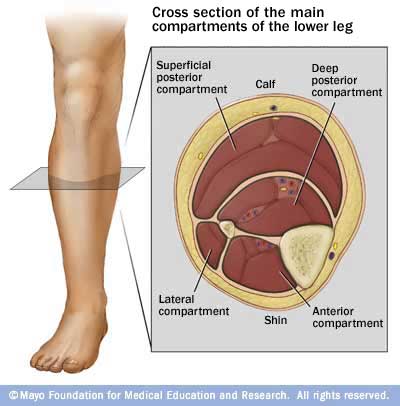
When we exercise, the body pumps blood to the muscles that are being worked, causing the muscles to swell or expand. The muscles are contained within a sheath. You know when you buy meat from the supermarket and it sometimes has that clear, stretchy stuff on it? That clear covering is the sheath. When people with compartment syndrome exercise, there’s not enough room within the sheath for the expanding muscle, therefore pressure builds and pain arises. A friend of mine once used a great analogy – it’s like trying to blow a balloon (muscle) up inside a drink bottle (sheath). It just doesn’t work.
Doing Something About it
I went to my GP who referred me to a specialist sports practitioner, who then referred me to a surgeon who specialised in compartment syndrome. Said surgeon sent me for tests (which, by the way, aren’t covered by ACC as the ‘injury’ is deemed to be progressive – kind of like RSI which, incidentally, IS covered).
Honestly, if there were a best part about having CECS, it would have to be seeing a medical practitioner about this condition and watching their eyes light up when you tell them what you have. It’s not a common condition and I think they get a little bit excited when they get to deal with something different from the norm. I digress!
By the time I got the appointment for pressure tests, I had developed drop-foot (or foot-drop as it’s otherwise known) which is when your foot makes a distinctive “slapping” sound as you walk because you can’t lift the front of your foot properly. I couldn’t walk more than 100 metres without the pain getting so bad I’d have to stop. Ten minutes after ceasing exercise, I was fine – which was probably the single most frustrating thing about the entire condition.
The Pressure Tests
I will not lie. The tests are not pleasant. Basically I had three injections of anaesthetic (in marked spots) into each leg to numb the areas for when the BIG needle gets inserted. I was then told to do an activity that causes the pain and come back to the room once it comes on. The specialist was surprised that I was back within five minutes, even though I’d continued as long as I possibly could because I wanted to be sure I got the results I knew would come.

The second round of injections measure the pressure inside the compartments of your leg. Anything over 30mmHg is “surgery territory”. As a gauge, my worst compartment was ~90mmHg. No wonder I was in so much pain!
As a result of the pressure tests, it was recommended that I be prioritised for surgery and I was placed on a waiting list. Through a mix of medical misadventure and me moving city again (and therefore District Health Board jurisdiction) it took me a further 8 months before I finally got my surgery. Bearing in mind that this was around two years after I had initially consulted my GP, I was virtually unable to walk and had put on a lot of weight – a horrible side affect for someone who used to be so active.
Finally! The Surgery
The technical name for the surgery I had was bilateral tricompartmental fasciotomies, which loosely translates to having three compartments in each leg released. When I say released… they make an incision, then cut open the sheath that holds the muscle in place. It basically allows the muscle to expand as large as it needs to when you’re exercising.
It was an overnight stay in Middlemore Hospital for me (and I’m thankful it was only one night!). When it was time to go home, I actually managed to stand up with my legs supporting my full weight while I got dressed. The only piece of advice I can give you is DON’T DO THIS. You may think you won’t move, but you will and it hurts! I was in a wheelchair to start of with, but given crutches before I left the hospital.
Healing Time
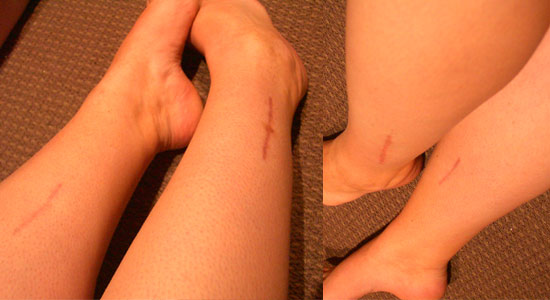
I have two scars on each leg – one on the outside above my ankle bone about four inches long and one on the inside of my leg toward the front about midway up my lower leg – about three inches long.
The advice I had read and was given was that it should be around 12 weeks until I could get 100% back into sport. This wasn’t the case for me, however. I went back to work two weeks after surgery (I recommend taking longer – perhaps another week) and even though I held a sedentary position, my ankles and feet would swell up enormously after keeping them “down” for the day, even though I had tried to elevate them as much as I could.
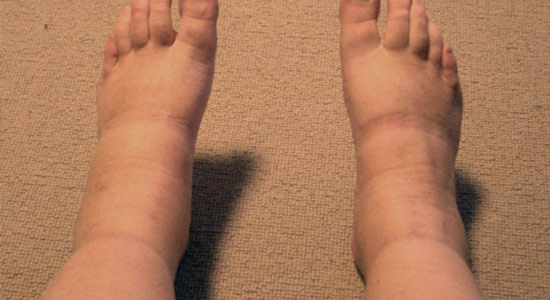
My employer at the time was less than supportive, even though I’d requested that I work from home. If you can, I would definitely aim for three weeks to recover. I was walking without crutches after one week but would still get pain and swelling in the week following. My recovery wasn’t aided by a minor infection in one of the wounds either, so I now have a more prominent scar than I would have otherwise.
Getting back into the Swing of Sport
So, after my two years of not being able to do anything, I was finally free to get back into sport! Unfortunately for me, I don’t think my body was as keen as my mind was and I was bogged down with miscellaneous injuries over the coming year (including prolapsed discs in my back and strained calf muscles). It’s now been around 15 months since I had the surgery and I’m finally uninjured enough to get back on the exercise wagon – enough to hopefully start losing some of the 20kg I packed on over the time I was involuntarily inactive.
Even when running now, I get numbness in my toes and feet. Areas of my leg, ankle and foot are still numb due to the nerves being severed during surgery but I’m hoping to get most of that feeling back. I still get some fatigue and soreness in the same areas as before but nowhere near the amount of agony I was in pre-surgery. My legs are also a funny “shape” because the muscles bulge out in places they didn’t bulge before, but it’s purely aesthetic and I knew to expect that. They are though, still a lot more svelt and “spongey” to the touch than they were pre-surgery. My poor legs.. what an ordeal!
Further Information
If you have any questions, you can contact me or leave a comment on this post.
Here are some websites I found useful:
MayoClinic – Chronic exertional compartment syndrome (Highly Recommended)
Wikipedia – Chronic Compartment Syndrome
EDIT: I have now also created a Facebook page. See https://www.facebook.com/compartmentsyndrome/
277 replies on “Life After Compartment Syndrome”
Great to read this blog and all the comments. My 19 yr old son went to physio with what we thought was shin splints. After treatment made no difference he suggested compartment syndrome. Since then we saw specialist who agreed and sent us to surgeon. Surgeon wasn’t convinced when son said he had tried to “run thru the pain” and said if it was compartment syndrome he wouldn’t be able to do this. We were then sent to sports consultant who has tried changing the way my son runs. Initially we thought it had been successful but since he has started soccer training again the old pain is back and today after his run there was a slight bulge on on leg! So next appt I am hoping they decide to do the pressure tests to find out one way or another!!! Thanks for this……is the Facebook page up and running?
Hey Erana!
like Tim I think some sort of Facebook group or page would be a great idea. I haven’t had my surgery yet but it’s scheduled for the 22nd of November. Love your blog and would love to see some support for people in NZ
Hi I am 10 days post op on my anterior and lateral compartments in both legs. I am still not walking without crutches and still very sore where my incisions are. I have my post op appointment in 4 days, where i will get my stitches out. I am just wondering when did people go back to work? My job is very active, which is going to be a test for me. Also when did people go back to running/sport/the gym? I am lucky so far as i have had no swelling or bruising, did any one suffer from swelling much later after the operation? Im hoping this works for me… i cant stand not being active and cant wait until i can run without pain or muscle swelling!
I am 4 weeks post-op CS on my calf, I was doing great till about 3 days ago, My leg started to burn every time I would stretch my foot out, I can no longer lay on that side, and now having trouble walking, after reading all of this I am kind of depressed… I was hoping that things would be better and i would have no more pain, The numbness i was having in my last two toes is gone, I also have the swelling in my ankle, but now I am going through this..I hope there is a light at the end of the tunnel I can’t go on like this without sleep! has anyone else experienced the burning after surgery??
I am in the military and was exercising and pushing myself pretty hard to get ready for my PT test(run, push-ups etc) when I had ran sprints and had pain but blew it off (as I have been a runner and exercised for years). Thought it to be due to muscle fatigue, however later that night I noticed swelling in my ankles and feet and by morning one of my legs from calf down turned black and blue with minor pain. I was seen the next day and after many tests to rule out other problems I was diagnosed with CECS. Since then I had surgery on may 18,2013 on left leg, Aug 14,2013 on right leg and then Sept 13,2013 on my left leg again because first surgery didn’t relieve the numbness or the pain. This last surgery has been the worst of all 3 and my pain is managed with medication. I was told that this would get me back to 100% and as I read these blogs I am fearful my problem will continue and that the surgery was in vain. I haven’t ran since Feb 2013 and definately miss exercising and being active. I am worried that they will eventually discharge from the service if it doesn’t get better and I am fully functional. Is anyone with CECS able to fully function at 100%?
I also feel the pins and needles you describe and my nerve was exposed in this last surgery and he also removed soft tissue around it to which i woke up from surgery in immense pain and it’s getting better but still there along with cramping and nerve pain. I have been in physical therapy since May and I still randomly lose my balance and deal with swelling.
I really hope someone will be my ray of sunshine and tell me that they have had a great recovery and that they can run with no issues…
Hi Erana,
Is there any sort of CECS support group in NZ? I’m a 28 year old Wellingtonian and would love to talk (even via Facebook) with others who have had compartment syndrome. I had surgery via the public health system in June 2010 (right leg) and November 2010 (left leg) releasing four compartments in each. Apart from the scars (I was left with 25cm scars down the outside of both legs and 10cm scars on the inside), I have had ongoing issues such as still not being able to run pain-free. Part of this is the weight gain (I went from ~75kg up to ~105kg due to lack of exercise), but it’s still frustrating to not be able to get fully active without considerable pain. It’d be great to have a forum where we can all give (and get) advice and tips on what is working and what’s not.
Tim
Hi Tim,
Thanks for your comment 🙂
I don’t think there is a support group in New Zealand. Did a quick search and there doesn’t seem to be much at all that is New Zealand-based.
As you can see, I still get comments from fellow sufferers almost four years after I posted this blog entry. I have set up a Facebook page but I’ll need a little more time to flesh it out a bit – then we’ll see how it goes.
Thanks again,
Erana
Hi Erena
Thank you for setting up this blog and also looking into setting up a facebook account for CS.
I had the compartment syndrome operation back in 2009, on just one leg. However, my leg has never come right and I have had to have several other operations since then. As I never had an accident and I wasn’t doing a type of sport to a level that would generally cause compartment syndrome, and it was only ever in one leg the specialists now suspect there are underlying issues which might be a reason for my ongoing issues.
Over the time I have had to teach myself how to do things differently and also had to teach myself techniques such as how to deal with on-going pain. The one issue that I have felt challenged with all this time is to talk to others who have had similar experiences, as compartment syndrome is not common and I could totally relate to the comment about how excited doctors get when you tell them you have it.
I would be really interested in joining the facebook group if you have set one up. Could you please supply the name of the group? I found one but not sure if it is you.
Many Thanks,
Karen
hey i had compartment syndrome back in oct 2011 and i would like to talk about it. its been really hard for me and would like to talk to someone who has had similiar experience. do you hav a facebook or emial we can chat on about it. thanks
Hi Tim
I had my CS operation back in 2009. Since then I have had a few other operations as my leg is not coming right and other medical issues have arisen. All of this has meant I haven’t been able to exercise like I did before CS. I decided a couple of years ago to go back swimming. There are days when I can use my leg and others when I can’t, the days I can’t I use my leg I use a kick board or pull bouy to help me swim.
I discovered our local pools has a weekly swimfit group, so I attend that. I spoke with the instructor who takes us before I went down and explained my situation, she has really accommodated my situation and I feel part of the group. I live in Auckland, but I think most council pools have something similar to this.
I also changed my diet as I had to recognize that I was a lot more sedentary than I use to be. I had put on 20kg since the my leg issues started, and I need to get to if off. For me I have adopted the approach of eat less. I started this last year and it seems to be going ok. I also got advice from one of the nurses after one of my operations to eat more dark green veges, because it apparently helps cleanse the body with all the medication that is pumped into you after an operation.
Hope this helps
Karen
I had my Bilateral Fasciotomy for compartment syndrome in both shins in December 2011. As of later, I am having the familiar pain in my shins.. I am a dancer, so the thought of having compartment syndrome again scares me. Prior to my surgery, I couldn’t run and walking was even difficult. The first year after the surgery was so good and I was so happy to have no pain. But this year, I have been getting night pains and now even pain during the day just sitting in class.
🙁 Going to return to the doctor, but it’s scary!
Hey Erana,
Great post – this is by far the best I have come across to read and also being in NZ also is cool! I’m only 20 and first started having symptoms when I was around 13yrs old. Was heaps fitter back in the day doing typical football through high school and Taekwondo, horse riding. Over time it got worse and I was just always told I was a little overweight and had bad blood circulation. So it’s been almost 8yrs on and I have my pressure test here in Wellington tomorrow which I’m freaked about because all I hear is how painful it is, very nervous to say the least! My problem is this: Normally I run anywhere from 2-5mins on the treadmill at the gym and I start getting the tight, aching feeling on the back/outer of my legs. If I fast walk up an incline on the treadmill it normally starts happening around 10min later on the outer/front. I have put on 11kg this year alone (last yr I was able to run 10-15min) and needless to say am quite unfit and my lungs don’t last long. I have been trying to keep up exercise for tomorrow’s test but all of a sudden my symptoms have gone and instead my lungs are gasping for air. Bit concerned as obviously I will need to bring my symptoms on! Fingers crossed anyway, very glad I came across this – guiltily whilst at work oops!
Cheers and good luck
Hi Claire,
Thanks for your comment!
Try not to freak out too much about tomorrow – they do anesthetise the spots with a normal needle (just a little prick) before they put the big needles in. It’s a little unpleasant when they’re gauging the pressure but it’s not too painful. You’ll feel a series of clicks – at least I did anyway – but that’s about it.
For me, fast walking and jumping on the spot brought the symptoms on faster than anything else. I was lucky to be in Wellington too – lots of hills to work with!
All the best for tomorrow – I hope it all goes okay. Though I’m not sure whether you’d prefer to have the high pressures or have to figure out what else it could be – neither seem like great options huh!
Good luck!
Hey Erana,
Thanks for that! The test was a piece of cake (of course your mind makes it seem like it will be worse) however I’m not sure how I feel about the results! The highest was 62mmHg and the lowest was 19mmHg – the rest were around the mid 20’s – 30mmHg which I have to admit I was quite surprised about considering when I went back into the room and was asked to lay on my back and try flop my feet up and down – I physically couldn’t. So I have my appt with the Orthopaedic Surgeon again next week to discuss the results and go from there – hopefully it’s just some problem with arteries or whatever but I’m not sure about the one that’s 62mmHg ha! Thanks heaps for this – it totally prepared me 🙂
Well, surgery it is for the anterior and lateral compartments, both legs. Interesting! But glad. I feel I couldn’t get my legs going well enough in the test because I am now so unfit and the lungs die on me pretty fast but apparently based on the results, the symptoms and all – it’s enough for the Orthopaedic surgeon to operate on. Yikes!
I had my surgery 7 months ago and my recovery has been amazing .. until today. i went for a run and i got the way too familiar pain in my calves and had to stop after 1 mile. i am utterly terrified that its coming back. someone please tell me if thats even possible?! i am a college field hockey player and i really was looking forward to having an amazing season to make me forget about the absolutely painful one i had last year. SOMEONE PLEASE HELP! :”'(
Hey Jillian
I haven’t heard too many people say that they were absolutely 100% cured after surgery. Though whether that is because the surgery isn’t done right the first time (ie the surgeon didn’t release the whole sheath) or if it is another underlying condition, I’m not sure. I still get pain also and, admittedly, haven’t managed to return to the level of activity I was undertaking pre-diagnosis.
Sorry to be the bearer of bad news – maybe others have had different/better experiences!
Sorry to hear about the reappearance of your symptoms, unfortunately cs can reoccur due to either an inadequate release or the scar tissue may have formed over the fascia like stitches holding a wound closed. I would follow uo with your doctor. Btw just mentioning the above cause it happened to me …. Hang in there and do some research on possible other explanations for your symptoms ie tendonitis,muscle strain etc. good luck!
It is indeed a very useful blog. I have been diagnosed with chronic CS. I resumed brisk walking in early March this year, and I felt pain in my left leg during brisk walks, which used to start after 20 minutes or so at the start of the walk. This pain lasted for a month or so, and limited my walking. But over time, it’s completely gone. Now, I no longer feel any pain in my left leg even if I walk 10-12 kilometers in one go. However, after pressure test and other diagnosis, orthopedic surgeon has recommended surgery in coming August. Nevertheless, keeping in view my existing situation, I do not think that I should opt for day surgery, as I do not need it. After reading this post, I feel I am right in my thinking. Therefore, I am planning to treat it with Physiotherapy and stretchings. However, I would love any piece of advice regarding my decision.