I’m not a marathon runner. In fact I don’t really even think I’m that much of an athlete. However I have suffered from chronic exertional compartment syndrome and have since had surgery to correct it. I thought I’d write about my experience here in the hopes that someone might find it useful.
A Little Bit of History
I was very active, mostly with a lot of squash, premier netball, as well as the odd game of touch rugby. I had had a tightening of what I thought were the muscles on the outside of my legs for some time and had asked various people if they knew how to stretch them. I’m fairly au fait with anatomy after studying it at school but even I couldn’t figure it out. They’d been uncomfortable mostly while I was playing netball, but I put it down to not being as fit as I could be and put up with the pain.
It wasn’t until one day I was playing squash when the pain got so bad I had to come off the court. Luckily the manager of the team I was training with happened to be a physiotherapist and mentioned that the symptoms I was describing sounded like compartment syndrome. I was training for squash nationals and playing finals netball so I didn’t want to stop. I’m also fairly stubborn when it comes to pain stopping me doing things (says the girl who walked home one day with two badly sprained ankles!) so I didn’t treat this any differently.
With squash nationals done and dusted, I moved away from the city where I first heard about compartment syndrome a few months later but began to research it online. It wasn’t until one day I left the squash court and ended up on the floor in tears from the pain that I knew I had to do something about it.
What causes the pain?
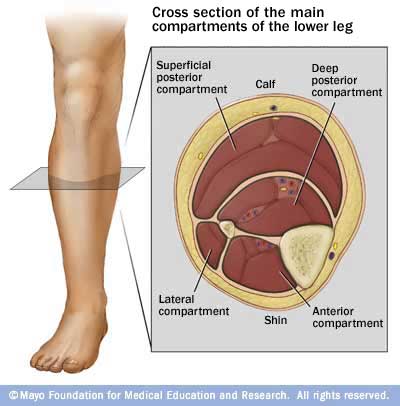
When we exercise, the body pumps blood to the muscles that are being worked, causing the muscles to swell or expand. The muscles are contained within a sheath. You know when you buy meat from the supermarket and it sometimes has that clear, stretchy stuff on it? That clear covering is the sheath. When people with compartment syndrome exercise, there’s not enough room within the sheath for the expanding muscle, therefore pressure builds and pain arises. A friend of mine once used a great analogy – it’s like trying to blow a balloon (muscle) up inside a drink bottle (sheath). It just doesn’t work.
Doing Something About it
I went to my GP who referred me to a specialist sports practitioner, who then referred me to a surgeon who specialised in compartment syndrome. Said surgeon sent me for tests (which, by the way, aren’t covered by ACC as the ‘injury’ is deemed to be progressive – kind of like RSI which, incidentally, IS covered).
Honestly, if there were a best part about having CECS, it would have to be seeing a medical practitioner about this condition and watching their eyes light up when you tell them what you have. It’s not a common condition and I think they get a little bit excited when they get to deal with something different from the norm. I digress!
By the time I got the appointment for pressure tests, I had developed drop-foot (or foot-drop as it’s otherwise known) which is when your foot makes a distinctive “slapping” sound as you walk because you can’t lift the front of your foot properly. I couldn’t walk more than 100 metres without the pain getting so bad I’d have to stop. Ten minutes after ceasing exercise, I was fine – which was probably the single most frustrating thing about the entire condition.
The Pressure Tests
I will not lie. The tests are not pleasant. Basically I had three injections of anaesthetic (in marked spots) into each leg to numb the areas for when the BIG needle gets inserted. I was then told to do an activity that causes the pain and come back to the room once it comes on. The specialist was surprised that I was back within five minutes, even though I’d continued as long as I possibly could because I wanted to be sure I got the results I knew would come.

The second round of injections measure the pressure inside the compartments of your leg. Anything over 30mmHg is “surgery territory”. As a gauge, my worst compartment was ~90mmHg. No wonder I was in so much pain!
As a result of the pressure tests, it was recommended that I be prioritised for surgery and I was placed on a waiting list. Through a mix of medical misadventure and me moving city again (and therefore District Health Board jurisdiction) it took me a further 8 months before I finally got my surgery. Bearing in mind that this was around two years after I had initially consulted my GP, I was virtually unable to walk and had put on a lot of weight – a horrible side affect for someone who used to be so active.
Finally! The Surgery
The technical name for the surgery I had was bilateral tricompartmental fasciotomies, which loosely translates to having three compartments in each leg released. When I say released… they make an incision, then cut open the sheath that holds the muscle in place. It basically allows the muscle to expand as large as it needs to when you’re exercising.
It was an overnight stay in Middlemore Hospital for me (and I’m thankful it was only one night!). When it was time to go home, I actually managed to stand up with my legs supporting my full weight while I got dressed. The only piece of advice I can give you is DON’T DO THIS. You may think you won’t move, but you will and it hurts! I was in a wheelchair to start of with, but given crutches before I left the hospital.
Healing Time
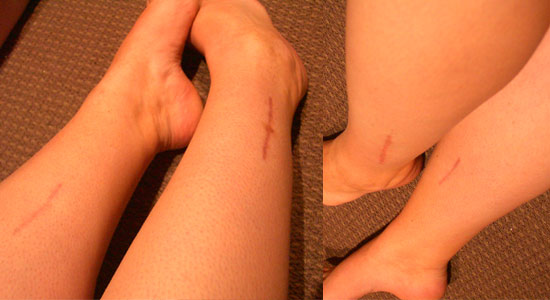
I have two scars on each leg – one on the outside above my ankle bone about four inches long and one on the inside of my leg toward the front about midway up my lower leg – about three inches long.
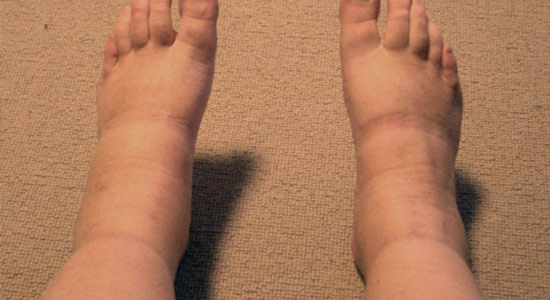
The advice I had read and was given was that it should be around 12 weeks until I could get 100% back into sport. This wasn’t the case for me, however. I went back to work two weeks after surgery (I recommend taking longer – perhaps another week) and even though I held a sedentary position, my ankles and feet would swell up enormously after keeping them “down” for the day, even though I had tried to elevate them as much as I could.
My employer at the time was less than supportive, even though I’d requested that I work from home. If you can, I would definitely aim for three weeks to recover. I was walking without crutches after one week but would still get pain and swelling in the week following. My recovery wasn’t aided by a minor infection in one of the wounds either, so I now have a more prominent scar than I would have otherwise.
Getting back into the Swing of Sport
So, after my two years of not being able to do anything, I was finally free to get back into sport! Unfortunately for me, I don’t think my body was as keen as my mind was and I was bogged down with miscellaneous injuries over the coming year (including prolapsed discs in my back and strained calf muscles). It’s now been around 15 months since I had the surgery and I’m finally uninjured enough to get back on the exercise wagon – enough to hopefully start losing some of the 20kg I packed on over the time I was involuntarily inactive.
Even when running now, I get numbness in my toes and feet. Areas of my leg, ankle and foot are still numb due to the nerves being severed during surgery but I’m hoping to get most of that feeling back. I still get some fatigue and soreness in the same areas as before but nowhere near the amount of agony I was in pre-surgery. My legs are also a funny “shape” because the muscles bulge out in places they didn’t bulge before, but it’s purely aesthetic and I knew to expect that. They are though, still a lot more svelt and “spongey” to the touch than they were pre-surgery. My poor legs.. what an ordeal!
Further Information
If you have any questions, you can contact me or leave a comment on this post.
Here are some websites I found useful:
MayoClinic – Chronic exertional compartment syndrome (Highly Recommended)
Wikipedia – Chronic Compartment Syndrome
EDIT: I have now also created a Facebook page. See https://www.facebook.com/compartmentsyndrome/
277 replies on “Life After Compartment Syndrome”
Thank you! Its nice to finally read a CECS experience that is so similar to my own. My main concern is swelling at this point… When did your feet/ankles stop swelling after normal daily activity? My surgery was exactly 7 weeks ago and trying to figure out when I can expect to be “normal” again!
Hey Leah
It probably took a good 12 weeks for them to stop swelling. Just try to keep them up as much as possible. I did go to one doctor who thought it was just water retention, so I guess that is something to consider as well (although in my case it was just plain ol’ swelling!)
All the best!
Hey hows it going im 26 and from Wellington, NZ
I was diagnosed with compartment syndrome in 2007. I was at university at the time doing sprints which was part of my diploma in sports science. My tutor told me to go and see a friend of hers who is a physiotherapist. She spotted it in the gym and did some pressure testing with me. I just had my surgery three weeks ago. I put up with it for nearly 6 years as insurance would not pay for it. What i mean is i didnt have the money and i tried to save for it but failed and am too stubborn to ask for help but finally gave in and swallowed my pride. My brother had the same condition. The same surgeon did both out surgeries. Worked in Australia in 2008 till 2010 doing sales on foot. I would stand and listen to my boss whilst maintaining an engaged expression upon my face so i would not show the pain i was in just standing for 20 mins. How fukn ridiculous..right? Then i would go out and walk the streets for 6 hours. I enjoyed it looking back as I learnt some good skills although don’t miss the pain. I was constantly on painkillers but from the sounds of it there are people who have commented here who have it way worse than me…well so far. Will see how much longer till i heal..doing exercises at the moment and they are getting better so just taking it day by day as i would advise anyone to do the same.
ADVICE: Put trust in people. THe doctors, nurses and surgeons are in the profession of repairing/saving life and as such they must have good in them to want this as a profession. I did get a little nervous when they started wheeling me into the surgery room but hey i found solace in the fact i was about to be put unconscious and they were all reassuring – hope this helps
1st week – So a couple days after surgery it was like my legs were in shock. The reason i say this because i was walking around with crutches so happy it was done with no pain yada yada yada. Then suddenly the next day i was severely sore and my hamstrings bruised up something fierce. This lasted all week. What was funny from a guys point of view is sitting down when you number 1 thinking wtf is happening. Is weird what makes u laugh.
2nd week – Its interesting as the more i have a chance to reflect on the difficulties i have i.e making food, showering and geting dressed..i become grateful and didnt realise how much i used to take things for granted. This whole week i’m dragging my butt across the ground like a worm because the pain is too great to use crutches..this was bloody demanding but in the end i am lucky my parents paid for the surgery which i was reluctant to accept but will pay them back someday. So all in i can only seek the good and move forward even though i can have a moan to myself now and then.
3rd week – this is this week and its wednesday. I applied for a job today as i cannot bare watching another movie or watching an abundance of television :D. Excited! It may be premature of me but we will see in time..
Cannot wait till the day i can run again…the thought overwhelms me with emotions that move the soul.
Hi my name is aaj ,I had a surgery in my head when I woke up I had severe pain in both legs.after 3days went back to the theatre the did the test n straight away the did the surgery on both legs.when I work up they tall me I got compartment syndrome they had to do the surgery now n then .that was Feb last year ,near a year I still in a lots pain and can’t walk without the clutches my life been turn up side down
Hi, I’m 51 yrs old and have exercised on a regular basis for 22 yrs. Do cardio at the gym and lift weights. I broke my ankle 12-08 and wore a cast on my right leg for 2 months and a boot for 1 month, I hopped on my left leg the entire time. Then in 1/2010 I decided to exercise harder to lose the 10lbs I gained and then started experencing pain on my left leg after I worked all day and sit in my car, that was the only time it hurt until I went to PT. and he had me doing stretching exercises thats when it got worse and hurt almost all the time. Since then Ive had 4 surgeries from a very well known Dr in Madison Wisc. had my latest surgery in 10/12 and I still hurt, exspecially the backs of my calves and the surgery sites. I take aleve , tramadol and norco qd and have since before my 1st surgery in 4/10. The tramadol really helps for a few hours, sometimes need to take an extra then norco after work. I’ve talked to a couple people on the phone that I found on line and thru my sister-in-law. They both have had CS in both legs and one of them now has it in her arms and the other just had surgery in the same spot after 17 yrs. I hate to say it, but I really believe I’m always going to have problems and will have to stay on meds, unless the Dr’s stop giving them to me, which would be very cruel. I do still exercise but I dont run, I do the glider which is hard but I fight my way thru it, still do weights but not my legs, I figure Cardio is good enough. I wish you all the best!!!
Im having cs as well and tge pain is getting on my last nerve. I get these midnight pains that last for about an hour. Obviously not getting much sleep ajd i ru track, im 18 and i scsred to got the surgery and not being able to run for the season.how long is recovery on average and how much doe it cost?
Your blog is very helpful! I had the superficial and deep posterior compartments on both my legs release about 7 weeks ago. I am a college athlete and trying to recover from this is extremely frustrating. I’m not used to being unable to run at even a slow pace especially for as long as its been. The pressure from my trainer and coaches doesn’t make it any easier. I’ve been irritated because I feel like it’s too much on my body already since I still get pain, but still want to be able to do the things I could before so I started looking for other people’s stories online. Yours is one of the most helpful I’ve seen. I was able to identify with the same feelings like the pins and needles and still get them even after the surgery. It made me feel much better knowing that I wasn’t the only one that anticipated a shorter recovery but was sadly mistaken.
Thank you
Thanks for your blog. For a bit of insight for you.
In 2002 at age of 12 I started to hAve immense pain in both calves. Outer muscle. I was a fit kid and was playing rep rugby. For the next 3 years until 2006 I continued at high school with this pain. Playing for the top age grade rugby team. Constantly pushing through the pain that I’d be in tears running through it
I had endless amounts of acupuncture which didn’t help.
The only thing that helped was a very deep like elbow deep massage prior to exercise.
Nobody knew what was wrong until a boxing instructor told me to see a local sports doctor. He did the pressure test on me and refered me to the specialist.
It took about 6 months for the operation to happen through private hospital. I was 16 when I got the operation.
It took a while to heal and one of the wounds got infected. I have a permanent numbness in my right foot due to the Dr hitting a nerve.
The operation did reduce the affect that CS has on me but now 6 years since the operation I still get pain which hinders my ability to train and play rugby.
The only thing that seems to relieve the pressure for me is serious deep tissue massage. Very painful at the time but the satisfaction of being able to run continuously with out my legs feeling like solid pieces of wood it makes me happy.
What I say to people awaiting their operation is go into it open minded. The operation may or may not fix the problem and you need to find otherways to relieve the pain.
Good luck fellow CS sufferers
Hi, My name is Vicky. I really need your help. I’m so confused about compartment syndrome. I had polio when I was very young. I was paralized on my left side for awhile. Through therapy I got use of my left side…but weak. All the years I used my right side for my strength. I’ve never been able to run and walk slowly. I just finshed my second release surgery about 25 days ago. I thought I was doing well. Now I have swelling in my leg. Black and blue on the side of my foot. A lump on the side of my foot. Toes are black and blue. In the last 24 hours now the back of my calf is so painful. I can’t let anything touch it. Hard to sleep. I went to Er and to see the dr. They say this is normal.I’m in more pain now than I was before surgery. Please tell me …is this normal. I’ve had alot of surgery’s in my life time. I can take pain…but this is aweful. I just don’t know what to do. please help me. Thank you, Vicky
Most of my experience is just like yours except for basically 2 things. 1)I did/do a lot of running and 2)I didn’t get any type of numbing medicine when I got the tests.
Ive got resting pressures in the 70’s and active in 100’s in both my arterial and lateral muscles and been waiting 4 months for surgery im in pain all hours of the day
Hi, I am booked for surgery next week in Rotorua.
My CS was caused by 17 hours in high heeled boots on a work trip to Auckland on 22 August (I usually wear steel capped boots to work and flats at w/ends)- ended up in ED where pereneal nerve injury was diagnosed . I have appreciated all these stories but worry as they are all from fit people whose CS was caused by extended and prolonged exercise – that is definitely not my case. (Unfit and overweight ) I haven’t had a pressure test but have had MRI and have got a virtually a completely numb foot and dropped foot as a result. My op was going to be paid privately through my employer but their insurers have decided the infections (which arrived 3 days after the initial pain) has caused the CS – but the public serves operation is only one week and one day after the private one was booked. any advice- support would be so appreciated