I’m not a marathon runner. In fact I don’t really even think I’m that much of an athlete. However I have suffered from chronic exertional compartment syndrome and have since had surgery to correct it. I thought I’d write about my experience here in the hopes that someone might find it useful.
A Little Bit of History
I was very active, mostly with a lot of squash, premier netball, as well as the odd game of touch rugby. I had had a tightening of what I thought were the muscles on the outside of my legs for some time and had asked various people if they knew how to stretch them. I’m fairly au fait with anatomy after studying it at school but even I couldn’t figure it out. They’d been uncomfortable mostly while I was playing netball, but I put it down to not being as fit as I could be and put up with the pain.
It wasn’t until one day I was playing squash when the pain got so bad I had to come off the court. Luckily the manager of the team I was training with happened to be a physiotherapist and mentioned that the symptoms I was describing sounded like compartment syndrome. I was training for squash nationals and playing finals netball so I didn’t want to stop. I’m also fairly stubborn when it comes to pain stopping me doing things (says the girl who walked home one day with two badly sprained ankles!) so I didn’t treat this any differently.
With squash nationals done and dusted, I moved away from the city where I first heard about compartment syndrome a few months later but began to research it online. It wasn’t until one day I left the squash court and ended up on the floor in tears from the pain that I knew I had to do something about it.
What causes the pain?
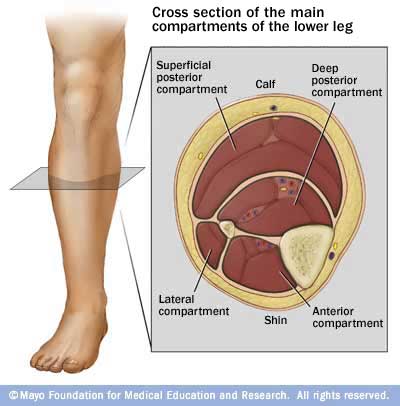
When we exercise, the body pumps blood to the muscles that are being worked, causing the muscles to swell or expand. The muscles are contained within a sheath. You know when you buy meat from the supermarket and it sometimes has that clear, stretchy stuff on it? That clear covering is the sheath. When people with compartment syndrome exercise, there’s not enough room within the sheath for the expanding muscle, therefore pressure builds and pain arises. A friend of mine once used a great analogy – it’s like trying to blow a balloon (muscle) up inside a drink bottle (sheath). It just doesn’t work.
Doing Something About it
I went to my GP who referred me to a specialist sports practitioner, who then referred me to a surgeon who specialised in compartment syndrome. Said surgeon sent me for tests (which, by the way, aren’t covered by ACC as the ‘injury’ is deemed to be progressive – kind of like RSI which, incidentally, IS covered).
Honestly, if there were a best part about having CECS, it would have to be seeing a medical practitioner about this condition and watching their eyes light up when you tell them what you have. It’s not a common condition and I think they get a little bit excited when they get to deal with something different from the norm. I digress!
By the time I got the appointment for pressure tests, I had developed drop-foot (or foot-drop as it’s otherwise known) which is when your foot makes a distinctive “slapping” sound as you walk because you can’t lift the front of your foot properly. I couldn’t walk more than 100 metres without the pain getting so bad I’d have to stop. Ten minutes after ceasing exercise, I was fine – which was probably the single most frustrating thing about the entire condition.
The Pressure Tests
I will not lie. The tests are not pleasant. Basically I had three injections of anaesthetic (in marked spots) into each leg to numb the areas for when the BIG needle gets inserted. I was then told to do an activity that causes the pain and come back to the room once it comes on. The specialist was surprised that I was back within five minutes, even though I’d continued as long as I possibly could because I wanted to be sure I got the results I knew would come.

The second round of injections measure the pressure inside the compartments of your leg. Anything over 30mmHg is “surgery territory”. As a gauge, my worst compartment was ~90mmHg. No wonder I was in so much pain!
As a result of the pressure tests, it was recommended that I be prioritised for surgery and I was placed on a waiting list. Through a mix of medical misadventure and me moving city again (and therefore District Health Board jurisdiction) it took me a further 8 months before I finally got my surgery. Bearing in mind that this was around two years after I had initially consulted my GP, I was virtually unable to walk and had put on a lot of weight – a horrible side affect for someone who used to be so active.
Finally! The Surgery
The technical name for the surgery I had was bilateral tricompartmental fasciotomies, which loosely translates to having three compartments in each leg released. When I say released… they make an incision, then cut open the sheath that holds the muscle in place. It basically allows the muscle to expand as large as it needs to when you’re exercising.
It was an overnight stay in Middlemore Hospital for me (and I’m thankful it was only one night!). When it was time to go home, I actually managed to stand up with my legs supporting my full weight while I got dressed. The only piece of advice I can give you is DON’T DO THIS. You may think you won’t move, but you will and it hurts! I was in a wheelchair to start of with, but given crutches before I left the hospital.
Healing Time
I have two scars on each leg – one on the outside above my ankle bone about four inches long and one on the inside of my leg toward the front about midway up my lower leg – about three inches long.
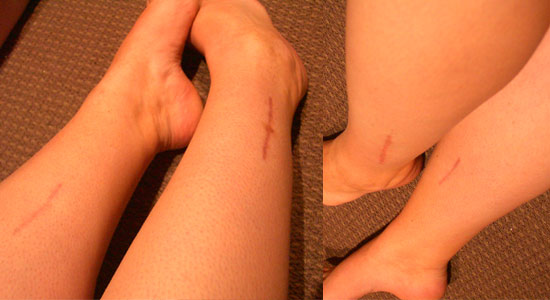
The advice I had read and was given was that it should be around 12 weeks until I could get 100% back into sport. This wasn’t the case for me, however. I went back to work two weeks after surgery (I recommend taking longer – perhaps another week) and even though I held a sedentary position, my ankles and feet would swell up enormously after keeping them “down” for the day, even though I had tried to elevate them as much as I could.
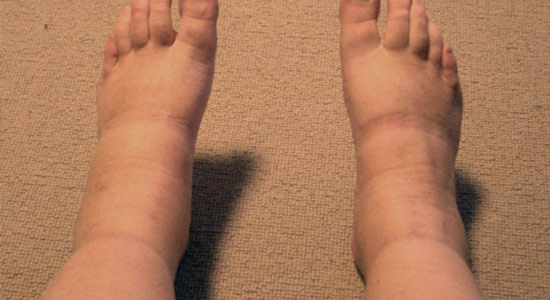
My employer at the time was less than supportive, even though I’d requested that I work from home. If you can, I would definitely aim for three weeks to recover. I was walking without crutches after one week but would still get pain and swelling in the week following. My recovery wasn’t aided by a minor infection in one of the wounds either, so I now have a more prominent scar than I would have otherwise.
Getting back into the Swing of Sport
So, after my two years of not being able to do anything, I was finally free to get back into sport! Unfortunately for me, I don’t think my body was as keen as my mind was and I was bogged down with miscellaneous injuries over the coming year (including prolapsed discs in my back and strained calf muscles). It’s now been around 15 months since I had the surgery and I’m finally uninjured enough to get back on the exercise wagon – enough to hopefully start losing some of the 20kg I packed on over the time I was involuntarily inactive.
Even when running now, I get numbness in my toes and feet. Areas of my leg, ankle and foot are still numb due to the nerves being severed during surgery but I’m hoping to get most of that feeling back. I still get some fatigue and soreness in the same areas as before but nowhere near the amount of agony I was in pre-surgery. My legs are also a funny “shape” because the muscles bulge out in places they didn’t bulge before, but it’s purely aesthetic and I knew to expect that. They are though, still a lot more svelt and “spongey” to the touch than they were pre-surgery. My poor legs.. what an ordeal!
Further Information
If you have any questions, you can contact me or leave a comment on this post.
Here are some websites I found useful:
MayoClinic – Chronic exertional compartment syndrome (Highly Recommended)
Wikipedia – Chronic Compartment Syndrome
EDIT: I have now also created a Facebook page. See https://www.facebook.com/compartmentsyndrome/
277 replies on “Life After Compartment Syndrome”
Following accident June 12 / 2016 Compartment Syndrome (L) Leg.
From broken tibia & fibula the massive swelling in the lower leg reached such a proportion it was time for the Op Suite and the Orthopedic Surgeon……having taken some 12 hours to get to see the Orthopedic Dr from when I was 1st picked up by ambulance oh no……………………..Said the surgeon it’s taken too long……………..So this maybe an above the knee amputation !! It was the system that let me down. Very luckily I kept the leg !! He is a fantastic surgeon and supported My Wife and I all the way. 3 times back in theater to flush out dead tissue and this caused the Foot Drop. bugger…………………..
BTW. The Ambulance Officer had identified Compartment Syndrome!!!
THe other complications were many. DVT’s (deep vein thrombosis ) a huge blood clot was dissolved with blood thinner ‘Warfarin’ and boy as that a terrible time for me. My metabolism could not displace the dose so it built up so as to be Hospitalised twice. Vitamin K is an antidote and a bloody big needle as well.
Three weeks in acute care, eight weeks in rehab. Nine months on the pain in my leg and foot is still bad. Nights are the worst, days I can handle with meds.
I can’t lift my toes but I can feel the muscles in the calf wanting to. No problems with other movements. Already having ‘Sciolous and degenerative and genetical problems’ my spine is on it’s last legs. OHh what a state of affairs.
Can you guys recommend me a doctor who has done Chronic compartment syndrome surgery numerous times in Georgia? or any state in the USA?
I actually just had the lower right leg anterior and posterior fasciotomy THIS MORNING. My Doctor is out of Fall River, MA (Glenn Dubler); by far the absolute BEST orthopaedic surgeon I have EVER met.
Ya they say 4 weeks at first and every doctor will give you different recovery times my surgeon says its permanent. It just depends on the person
My dr in Michigan says he does them often. Michael Donahue (advanced orthopedics out of Auburn hills)
I will tell you I had Dr. Moore at Elite Sports Medicine in Nashville do mine and he works on our professional hockey team and football team so he’s really good and he takes most insurance. Might want to google Elite Sports Medicine in Nashville and try them.
Stony Brooke hospital I went here and they saved my dying leg I had compartment syndrome to my right leg and Right arm from being passed out in it for like 14 hrs. I went into emergency surgery to save my leg and they decided not to operate in my right arm but it hasn’t been the same think I need to go back for surgery. It’s been 7 years since my incident. Truly so painful and still to this day unfortunately. But that hospital is amazing . Best of luck.
I briefly read a few of the comments and it seems most of you have experienced acute compartment syndrome, which is different from chronic.
On that note, I had surgery 3 weeks ago, went back to work after 4 days (desk job). I stood on my tip toes the other day without thinking about it, and now one of my legs is tight again, like it was before the surgery. Will this go away?
I had severe acute compartment syndrome secondary to a recluse bite so our stories are very different and my recovery (4 months post op trauma fasciotomy and excision of wound over my shin) has been very difficult, but I was told that any stretching of the muscles (like when on tip toes) can cause inflammation but it’s normal to have it up to 8 weeks after when everything is healing well. You won’t have a reoccurrence of CS because the fascia is left open to allow for swelling.
I had developed foot drop but not in a typical presentation. I had lost the pulse in my foot which was later discovered to be from massive bleeding from the vessels deep in my muscle and suffered a perineal nerve compression injury along with sensory nerve damage that caused my to lose all feeling and movement in my foot.
My case is one in a million from what I was told but along with all the unusual stuff, I have had a lot of the normal things that come along with it. I fully stopped swelling around 7-8 weeks.
Has anyone has had the surgery for a second time? If so, how did it went for them? I had a bilateral fasciotomy on my both legs with 4 incisions. is the re-surgery the best option? What should I do?
This is my second surgery completed today. First bilateral one was approximately 6 weeks ago
Hi Jen,
DId your tightness go away? I had surgery for chronic compartment syndrome coming up 2 years ago and although I don’t get the pain I used to in my shins any more, now I get pain/extreme tightness up the backs of my lower legs which is stopping me being able to do simple exercise. I went for physio which I didn’t find helpful and have recently started to get sports massage which is sore but helps to relax it for a while. Would be good to hear your experience or if anyone else has had similar problem to me?
Hi,
I have seen a lot of comments that talk about chronic CS, my case appears to be less common. I was admitted to hospital via the emergency room. My symptoms were attributed to pneumonia complicated by acute kidney failure I was treated with emergency dialysis and antibiotics. The pneumonia had caused dehydration to the point that doctors were unable to place a line for the dialysis connection and were forced to install a steel tube into left leg bone marrow to get blood flow to the dialysis machine. At some point following the placement of the line into the bone the tube was dislodged and pressured up the compartments in my left leg. An emergency fasciotomy was performed on my left leg in the ER leaving two 6″ scars on my inner and outer calf. This surgery had no relation to the problems that brought me to the hospital. It was an unfortunate event that has left me with nerve damage and consequent “Foot Drop”.
I am 6 weeks post surgery I have been evaluated by a specialist who performed an ENG test to establish a base line for the state of the nerves in my leg to be followed up with the same tests in 90 days to see if there is any change (hopefully improvement). I am taking gabapentin for nerve pain which is pretty much continuous at a level between 3 and 4 out of ten. The meds will give me relief for a couple of hours making it possible to get out and shop for groceries when needed. I take hydromorphone for surgical pain which I intend to revise to Tylenol as the surgery heals. I have been fitted with an orthotic device that wraps my calf and supports the bottom of my foot. This device has a rubber hinge that prevents my foot from drooping when I walk. I have a similar device for when I sleep that keeps my Achilles tendon extended to prevent shortening and subsequent gait issues assuming the nerve damage resolves. I experience swelling in my left foot when I leave my foot down or walk around for awhile. The swelling goes down overnight when I get horizontal but quickly returns in the morning. I am planning to increase the time I have it elevated to see if that helps. My GP informs me that the swelling should diminish as the tissues affected by the surgery heal and blood vessels remodel. I am told the nerves regenerate at a rate of 1mm per day and a bit longer at points where the nerve has been nicked or compressed and longer still to bridge any breaks. At the end of the day it is very difficult to nail down the length of time it will take to fully restore sensation to my foot if it happens at all. Best case, I anticipate living with drop foot and nerve pain for a minimum of a year. The pneumonia was serious and coupled with the kidney failure it put me in the ICU unconscious for 6 days and hospitalized for a month, I feel fortunate to have survived. That said, the fallout from the fasciotomy sucks and I will be dealing with it for years. Fortunately my work does not require me being on my feet so I can still make a living and I am not athletic so no loss there. Best wishes and good luck to all those who are afflicted with this nasty health problem.
Curious if anyone has any information to help.
I grew up being an active volleyball player and snowboarder. About 4 years ago I developed pain in my right leg and was diagnosed as shin splints so I began PT to help massage my muscles and release the pain. This PT never ended up changing any of the pain I was having so I kind of gave up. So I proceeded to go on a snowboarding trip to Colorado, the pain became more intense and seemed to have moved to my left leg as well, I ended up leaving my trip with swelling on my right leg as big as a golf ball. Came home and was diagnosed with compartment syndrome in both of my legs, and had surgery a month later. The healing process was fine, but my doctor told me PT wasn’t necessary and all I needed to do was massage my muscles once the scars closed. I massaged my legs and everything seemed to have healed properly. Except two years later I am having the same pain in my right leg, is it possible my surgery wasn’t successful? Should I just give up on snowboarding completely and stick to exercises without a lot of leg pressure?
Hi guys, great reading all the comments I was looking for a case like mine but didn’t see one ( unless I missed it ).
I’m 41 years old and wrecked my leg skateboarding, I basically fell about 6 foot and landed on a straight leg pushing my knee In to my tibia splitting it down the middle. I wasn’t sure what I had done and thought it was just jarred or I’d pulled some muscles so I didn’t go to the hospital for a few hours till it really starting hurting. They X-rayed it saw the break then put it I a temp cast till the next day when they saw the swelling and realised I had CS. I was rushed to a different hospital for surgery to release the pressure and bolt the bone but it was 24 hours after the injury when this happend.
After a few weeks of watching the open wound the muscles were dying and 3 had to be removed, 5 surgerys Later I have a scar from my ankle to the knee, a large indent along side my tibia and I will have permanent drop foot.
It’s been six weeks now and everything is going ok I think a lot of swelling, pain, numbness in the foot though. But down to the point of writing this I was wondering if anybody has had muscles removed and how the recovery went particularly what complications and struggles you encountered with recovery.
Cheers
You have acute compartment syndrome, not chronic . I can’t answer your question, but it might help to research acute instead of chronic
My compartment syndrome is similar to Todds. I was in Germany on the auto Hahn helping someone in a wreck and was hit by a car, broke my fibula and tibula and tore my cal and mcl.. Had surgery that night and the next day my leg was swollen and they had to cut it open and sit for a week, I’d develop complete syndrome and like Todd, 5 surgeries later I’m left with a scar from my knee to my ankle and a huge skin graph..
My 16 year old daughter had the big muscles removed from her forearm and tendons only 2 days ago. This was her 9th op as she kept getting banged and getting recurring CS.
She needs to have further surgery next week to close it with a skin free flap.
She also developed a wrist drop – volkmann contracture
i don’t have a website like this, so i’ll tag my experiences on to these comments. if someone is willing to get to mine after reading the above 82 comments- then they are probably researching this pretty intensely or have CS and are looking to see whats in store and if their experiences are normal.
so here goes- shattered my lower leg in a bad off-road motorcycle accident. went to emergency room where they waited approximately 13-14 hours before they operated. in that time, i developed CS. the internal bleeding filled and hydro-locked the compartments and the leg started to die.
so they sliced me like a swollen sausage casing from ankle to knee on both sides. (at least 14 inches each… which make it funny to see the host site’s little four inch scar.) and put me in an external fixator for 2 months.
infusion therapy (port in your arm and antibiotic flush twice a week) followed in those two months because you’re alive with a massive opened wound going down to the muscles… which had to be kept wet and bandages changed twice a day. (every change was like tearing the skin off again and again)
anyway- fixator came off and open fasciotomies covered with skin grafts and casted.
got out of the cast and had to learn to walk again on a leg that withered to nothing.
now, i’ve always been a pretty intense athlete- (ranked nationally in the collegiate marathon, huge cyclist, raced all types of motorcycles for 20 years) and wasn’t content to walk with a limp the rest of my life.
so one day -about a year after the accident was out walking my dog and i tried it… i “ran” for ten steps. more “limped severely” for ten steps -but i did get both feet off the ground- so it was technically running.
next day, those 10 turned to 12… then 25… then 100… then 150…. 200…. 300… and last night, a little less than 3 yrs since the accident- i just ran 14 miles. (training for a 1/2 marathon race to mark my being officially “OVER” the accident.)
why am i posting my story? to let anyone that is going thru this know that you can get back into your life. there’s a lot of pain, effort and endurance ahead… but you can do it.
funny- the running made me “re-balance” and get my limpy leg working again. if i hadn’t, i’d have a chronic limp the rest of my life as my ankle was starting to point and my knee filled up with scar tissue. the body responds to BEING USED. if you don’t use it… shit locks up and starts to freeze.
anyway- just because you had a little operation for some discomfort or a massive injury that crippled you. don’t coddle yourself. work your body. for body is lazy. it only grows into what it needs to do. weight lifters only get the body to build more muscle by stressing their existing muscles to failure. bone only grows/gets stronger with vibration and impact. if you sit at a desk all day and walk with a cane… guess what? your body says “good enough” and stops.
just because you’re out of the hospital, doesn’t mean you’re finished. the accident took seconds. the surgeries took three months. the recovery took three years of CONSTANT EFFORT.
buckle up. put your whole effort in to it… its will be long hard road, but you can do it.
I had the surgery about 6 yrs ago and all i want to know is will ever be able to wear heels again
I like your comment!!!! Re training the body is a must!!!! I said I would train to do a triathlon after this CS… I recently had two 20cm long incisions down each side of my leg after a metal rod was inserted for a broken tibia,,,, I can’t walk on it… I’m tired and struggling, but I won’t give up!!!
Thank You! And good luck!
Thank you for sharing your story! It gives hope for me with my recovery. Here’s my story.
In October, A horse I was riding tripped and fell down on my right hip and thigh. After a few minutes laying there in intense pain, I was able to stand and walk. Got back on the horse with help and made our way back to the trailer. My leg was getting more and more painful as we went, and I finally decided to get off and try to walk the stiffness off. I got down and almost fell down, unable to put any weight on my right leg. Time to head to the hospital!
From the accident until I was seen in the ER was about 5 hours. Thankfully the Drs knew what they were doing and quickly ruled out any broken bones. Next was the pressure test in my thigh, which turned out to be 88, and I was fairly quickly whisked into surgery to open up my leg. I am now the proud owner of a 12 inch scar on my leg from knee to hip, 3 surgeries and 2 blood transfusions later. However, I feel lucky to have 2 mostly working legs. I spent a week in the hospital, 4 in the SICU. The Dr said the muscle was black when he first cut it open, but thankfully it started to pink back up once the fascia was cut. He flat out told me had I waited until the next day to come in and the outcome would have been entirely different.
I am slowly trying to jog again, through the pain in my knee. It took until now for the pain to subside enough to even consider jogging, but I am feeling encouraged reading your story, so thank you.
Life after compartment syndrome surgery…. March of 2016 will be 2 years since my injury, my leg was crushed in a car accident but no break. My left leg swelled to the size of a basketball before a surgeon was called in to perform the surgery. Very thankful that he was called because I might of lost my leg. With all that said I was wondering if anyone has had the same symptoms that I’m suffering for almost two years after surgery. And if anyone has found any relieve from these symptoms.
My Symptoms: leg swelling, ankle swelling, sever pain throught knee, leg foot and ankle… now I believe I’m suffering from flat foot with severe pain in the bottom of my foot.
I exercise and stretch both the ankle and calf. But nothing seems to work, typically after I’m done exercising and I have more pain and more swelling! Please if anyone knows anything that I can do to stop these symptoms I would greatly appreciate the info.
Hello Bill,
I seem to be encountering the same symptoms, although not as severe. My legs (I had surgery in both) are heavily scarred and have huge incisions. I have a fairly large edema. MRI and ultra-sound yield no alarms for concern.
It was recommended that I try a massage therapy with someone that specializes in “Structural Myofascial Therapy”. The goal is to release the scar tissue so the leg can properly heal and return to normal.
To date, I have tried 3 sessions and things seem to be improving slowly. Maybe this would be something that you can try.
In any case, please feel free to reach out to me at mark@budman.ca
Thanks,
Mark
I have pain in the bottom of the foot after the surgery. I had four incisions in my lower legs(shins) two years ago. Now I have pain in my foot. I do not have pain while playing, but after playing my feet feel numb. After a day of playing soccer, I start to have severe pain in my bottom of the feet. What should I do? I am using insert for my low arch, but I do not think it helps me that much. My feet was once swelled after playing but not often. My lower legs got better and do not get tight before the surgery, but I started to having pain in my feet. Please email me sungwoon916@gmail.com if you know anything that I can do to stop this symptoms. I would greatly appreciate the info..
Additional Info : I have been getting physical therapy on my shin about a month and getting massage on my feet but nothing help for my feet to get better. It is the most frustrating thing in my life. I really want to get back to playing soccer.
6 years I have been suffering with same pain’s no feeling in knee inner thigh bloody hurt like hell if catch it on something can not walk far as leg swells up and locks up lucky in a way could have lost leg cut upper leg with saw they had to open the lower leg to save it drive’s me mad hate walking with a stick and don’t wont to be in wheel chair hope yours gets better soon keep your leg up high when you can
Hi, I was diagnosed with compartment syndrome in 2002 when I was polevaulting on the university of Utah track team. My pressures ranged from 60-90 and I had a fasciotomy in two compartments and about 8 months after that had a fasciotomy in the other two compartments. So all 4 compartments are released but I find myself over 10 years later having that pain come back. I recovered well from surgery and didn’t really have any pain, had numbness but no pain for several years. Till about 2-3 years ago I started having the sharp pains again. My question is has anyone else who has had a fasciotomy started feeling pain again? And if so what has the doctors done? Do you have to get another fasciotomy, does the fascia regrow? I don’t really want to live my life in pain not being able to work out and taking medicine for the rest of my life. Any advice?
Yes. I have had the surgery and noticed great relief for a while. Now the pain has returned and I’m back too holding back tears during even the easiest of workouts.
I had a chronic compartment syndrome surgery in my both lower legs 2 years ago. After the surgery, my shins do not get tight like before the surgery. However, I started having pain in my both feet. After playing soccer or running, my feet really bother me like chronic compartment syndrome. I tried physical therapy, ice, hot, and stretches; none of them helped me. I really do not know how to explain the pain. It really hurts and bothers me that I do not want to walk. I went to see doctors and they had no idea what was wrong with my feet. I do not know if this is the side effect of the surgery. I really want to get back to playing soccer.
I did not have problems in my feet before. I started having this plain after running after 3 months of the surgery. When I massage or hot or ice my lower legs, my feet pain temporarily goes away and come back. Is it possible I have chronic compartment syndrome in my feet?
I just had a bilateral fasciotomy, after the pressure tests and before surgery I got this insane pain in my heels. The found I had clonus while doing the surgery in my calf. The dr did a gastrocnemius recession during surgery also. Haven’t had foot pain since!! Worth looking into. Hope that helps!!
Hi Sungwoon Choo…. Have you been tested for FPAES? (Functional Popliteal Artery Entrapment Syndrome), which is a very rare entrapment syndrome often mimicking symptoms of CECS (Chronic Exertional Compartment Syndrome). In this condition, the popliteal artery (situated behind the knee) becomes compressed in one or several places, with the most common place being trapped by the medial head of the gastrocnemius (the calf muscle on the inside of the back of the knee).
In this condition, every time the calf/gastrocnemius muscle activates, it compresses the popliteal artery. The popliteal artery is the artery in which blood flows from the thigh/upper leg through to the lower leg. In other words, if something is compressing it blood will not flow properly to the feet. It ‘s a bit like drinking through a large straw and pressing it with your fingers whilst sucking through the straw. The artey will be compressed sporadically and not all blood gets to the feet, therefore not enough oxygen for the tissues. The calf muscles are used with each step you take.
One of the non-invasive tests used to determine any interference in blood supply like this is called an ABPI Test (Ankle Brachial Pressure Index Test). What this entails is checking the blood pressure in both arms (brachial) as well as checking the blood pressure in the feet, using a machine called a doppler. If a manual device is used, there is calculation used to work out the result and whether or not it is in the normal limits. Some larger clinic will have another type of machine to measure everything at the same time.
A reading is taken before you exercise, and then you woulld be asked to walk on a treadmill set at a slight incline, and walk for a period of time until the symptoms occur. Another reading is taken and then compared. If reading is between 0.5 to 0.8 vascular supply is compromised.
Pulses in the feet may be present/palpable before you start running, and may be absent after your run, which would also reveal some issues with circulation
Other tests can be undertaken in hospital, in order to test for any blockages.
SOME QUESTIONS:
You mentioned having surgery for CECS. How many compartments were released? Did you get any nerve damage afterwards? Any areas on your legs that are still numb? Where did surgeon make the incisions?
What age are you? not trying to be nosey, but various things may be age related as well.
Whereabouts in the world are you?
Are you able to describe the pain in your feet, as you just mentioned that it hurts and bothers you.
Perhaps you should also consider looking at / investigating other areas, that could cause discomfort. Wherever in tyhe world you may be, consider seeing:
1) A podiatrist in order to have your lower limb biomechanics checked out – if your feet are rolling inwards (pronating) it can cause some discomfort in feet (arches/heel) on top of feet, ankle area, lower legs and knees
having tight muscles under the arch of the foot can also be uncomfortable.
CECS can also happen in the feet, but is extremely rare
2) Physiotherapist – have hips and lower back checked out, for any possible tightness of muscles; They would be able to put you on a stretching program if required
3) Perhaps an MRI of lower back may be of benefitto ensure no bulging/protruding discs in lower back,
4) A good sports physician.
(You may find all of these health professionals at a Sports Medicine Centre).
5) Myotherapy or sports massage
You need to remember that when you underwent a release of the fascia, there would be considerable scarring Not only the scar that is visible on your leg/s, but also underneath the skin, where the fascia were released.
I am also a keen soccer player, having played 6x weekly for many years, as well as for the Defence Force , and understand your frustrations.
I, like yourself, have undergone release of all 4 compartments for CECS just over 2 years ago. In addition, I have FPAES as well as another entrapment syndrome in the arms, called Thoracic Outlet Syndrome TOS). I must be really special. I have not yet resolved the PAES as I wanted to work out which symptoms remained after my CECS surgery. I have recently stopped playing soccer after a ligament and cartilage tear. now recovering before I contemplate my next sport
I hope some of this helps
Regards
Andrew Jardine